

Occasionally I’ll get a client who, despite their very best efforts, simply cannot make money.
In my practice, I work on the basis of treating the cause of the issues facing my clients, not just treating their symptoms, and so when I first came across these types of cases, I wanted to understand why some people could easily make a lot of money, while some other equally talented and hardworking people barely made any. Obviously circumstances play a role, but outside of that, relatively, were there other factors at play? Firstly, I had to learn about money as an energy.
What is Money?
All energy is ‘information that moves’, so how does money dovetail with that? So, how does money (as an energy) operate? How does it move? Here’s what I found. Money is alive and flowing. It is ‘out in the world’ economically, and as currency, it needs to be in constant movement. When money becomes idle or stagnant (like sitting in a bank account), it diminishes in value (relative to inflation), so, in other words, it loses its potency. Money needs to be moving and to be ‘in circulation’ (to retain its potency).
Curiously, the word ‘currency’ and the word ‘current’ (as in a ‘current’ that flows) have the same etymological root, which is from the Latin word ‘currere’, which means “to run” or “to flow.” A ‘current’ from the Latin ‘currens’ means “running”, used for things that flow, like water, air, or an electrical charge. The word ‘currency’ originally meant “something in circulation”, meaning something that runs or flows between people, and because money “flows” through an economy, the word stuck.

“Curiously, the word ‘currency’ and the word ‘current’ have the same etymological root, which is from the Latin word ‘currere’, which means ‘to run’ or ‘to flow’.”
The next thing I learned about money as an energy, is that money is masculine. Don’t confuse this with ‘male’, but you can see why sexism historically has favoured the male over the female, financially.
So, what does it mean that money is masculine? Money as an energy has a masculine dynamic, which means that it resonates energies such as strength, action, provision, achievement, outward flow, endurance, giving, protection, assertiveness, independence, decisiveness, ambition, logic in reasoning, discipline, resilience, risk-taking, problem-solving, structure with order, directness and taking initiative. You can contrast this with some “feminine” qualities, such as emotion, intuition, nurturance, receiving and holding, solace and the internal realms.
Money is also abundant. This is neither a masculine nor a feminine trait, but it is a trait of money nonetheless. In this context it means that money is lavish, opulent, fulsome, generous, inexhaustible, copious, free-flowing and open. It does not see ‘slices of the pie’, because to money, there is no pie. One benefit does not rule out another. There are no ‘trade-offs’. There may be restrictions with the conditions required to get money, such as the rules around getting a mortgage, but those are the restrictions of the institutions, not restrictions with money itself. Money, as an energy, is limitless.

“Money as an energy is masculine, which means that it resonates energies such as strength, action, provision, achievement, endurance, protection, assertiveness, independence, decisiveness, ambition, discipline, resilience, risk-taking, directness and taking initiative.”
Alongside its qualities and traits, money is completely neutral when it comes to judgement for ‘other’. It has a personality, as many energy sources do, but it is completely indifferent to whom it flows. Much like electricity, it goes where it is guided to go and it bypasses where it is not. Put simply, money bypasses those who block it. To use another analogy, money flows past those who say ‘no’ to it like water flowing past a large rock in the middle of a river. Just like the flows of water and electricity, money (as an energy) follows the path of least resistance.
Blocks to Money
So, if money is indifferent to where it goes, and it flows following the path of least resistance, it makes sense to ask about what it is that blocks money, meaning, what makes us not receive money? If money is neutral to where it goes, what sends it away? What repels money? There are two main things. In this, Part One, of this two-part blog we will address the first of these two things, and that is our beliefs about money.
Everything external to us is a reflection of our internal state in some regard. So, for instance, someone who carries depression in their emotional body will rarely see the goodness outside of themselves; their internal state is the lens through which they see the world and, so, their read on life is that it is gloomy and without hope or help. Of course, this is not true, but the lens for that person makes it feel true and so they believe it to be so and they construct their lives around that belief and it becomes a reality. And we interact with money in the same way.

“Our relationship with money begins with our beliefs about it. If we harbour negative beliefs about money, we will repel it.”
Put more simply, our relationship with money begins with our beliefs about it. Let’s look at some common, but untrue, beliefs.
Cultural
Societal narratives, from scarcity-focused economies, class narratives, religious teachings, movies (that portray wealth as corrupt), cultural admiration of suffering or sacrifice, and collective ideas contribute to (untrue) beliefs like: “Money is the root of all evil”, “Rich people are selfish or morally questionable”, “Money is a zero-sum game”, “You must work extremely hard to earn good money”, “Only certain types of people become wealthy”, and “Financial security comes from having a stable job.”
Familial
Experiences in childhood, watching how money was handled at home, parental stress, socioeconomic status, unspoken rules, survival patterns, emotional modelling and even intergenerational trauma contributes to our ideas about money, resulting in (false) beliefs, like: “Money causes conflict or stress”, “People like us don’t earn a lot”, “Be grateful for what you have and don’t ask for more”, “Money doesn’t grow on trees”, “You have to save every penny or you’ll end up broke”, or “Don’t earn more than your parents did or it will look like you think that you’re ‘better’ than them or ‘hurt their feelings’”.
Psychological
Internal fears, emotional associations from self-worth wounds, past failures, perfectionism, fear of visibility, fear of responsibility, or identity structures formed early in life can lead to psychological hang-ups around money like: “I’m bad with money”, “Money would solve all my problems”, “Wanting more makes me greedy”, “More money will make me a bad person”, “It’s too late for me to become successful”, “Making money is stressful and overwhelming”, or “I don’t deserve abundance and/or success.”

“One of the negative, untrue, beliefs about money is that ‘Making money is stressful and overwhelming’. If we carry this belief about money, making money will be stressful and overwhelming. It doesn’t have to be, though, and we can change that belief.”
Impact
If we have negatives beliefs about money, then we repel it. So, we need to identify any negative beliefs we may have and then scrutinise them to clear them. But how do we find out what those beliefs are, if they are subconscious?
How to Fix Our Beliefs About Money
Step One: What Does Money Mean to You?
To find out how you feel about money, ask yourself: “If money were a person, what kind of person would they be?” What race, gender and personality type would that person have? Would they be kind, willing and open? Bullish or confrontational? Would that person be approachable and willing to help, or aloof and dismissive? Or neither? How does money feel to you right now: warm, cold, distant, judgmental, exciting, overwhelming, calm, etc.? And go deeper, ask yourself how you behave with money: avoidant, controlling, trusting, impulsive, admiring, confused?
In society, a common belief about money is that if it were a person, it would be someone society admires, desires, blames and projects onto and talked about constantly but rarely understood. For many people, money feels like a strict parent, an unpredictable partner or distant authority figure, a charismatic but unreliable friend, reflecting their deeper fears or scarcity patterns. In a healthy dynamic, though, money becomes a steady, generous, collaborative presence, a reliable friend or supportive partner who responds when approached. At its most empowered, money shows up like a confident strategist or fair leader who honours boundaries and helps build stability and growth.
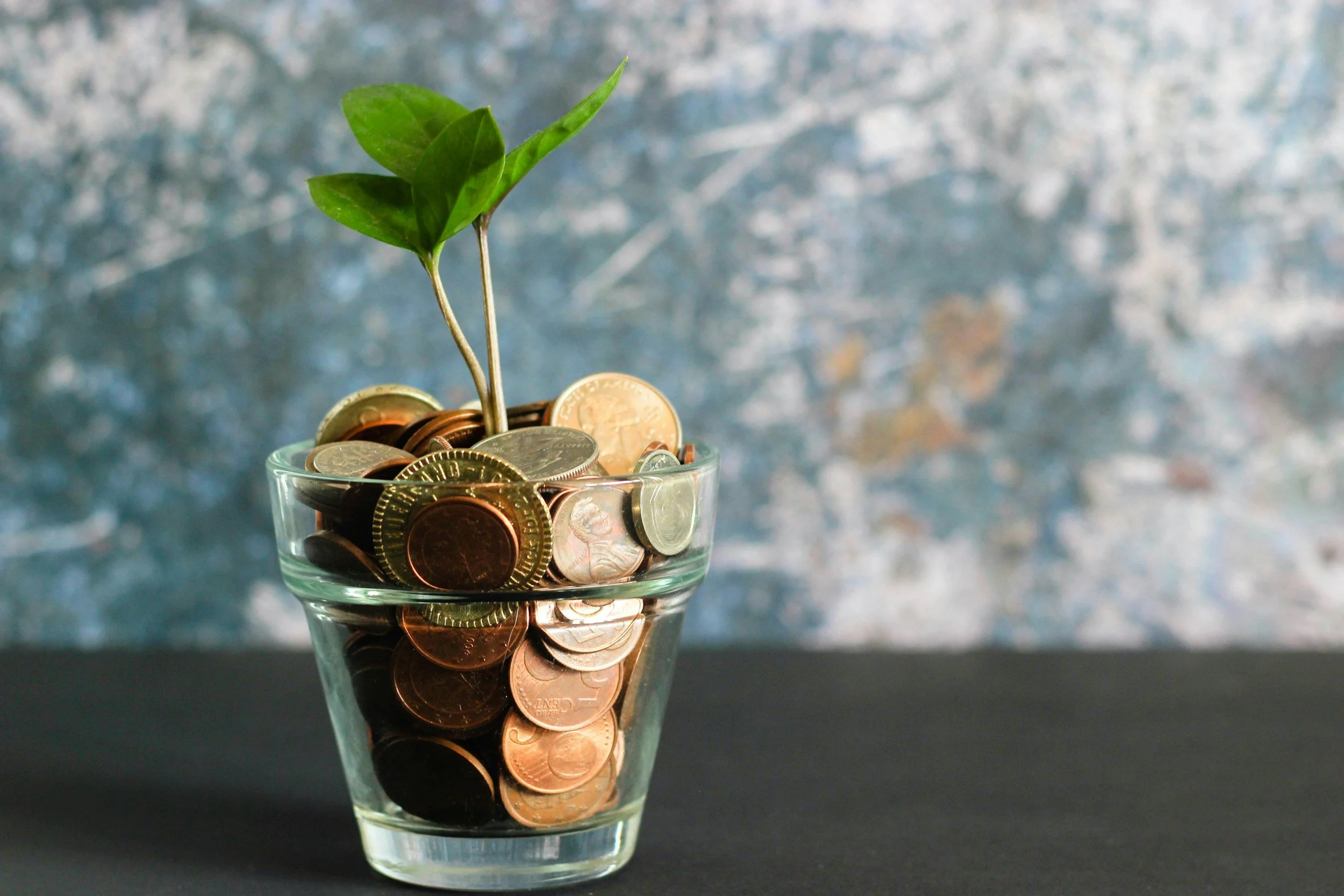
“Whatever you believe money to be, will inform your relationship with it, negatively or otherwise. And you can correct that. First find out what you believe money to be.”
Step Two: Negative to Nourish
Identify and extract each negative belief based on your answers and work on each one until your beliefs around money become healthy and positive. For example, if you believed that money was ‘hard to come by’ you might correct that by realising that your parents believed that but that you don’t have to, etc.
Once you have nourishing beliefs around money, your relationship becomes like one with a reliable, steady friend who is generous and supportive, who wants to collaborate, grow and expand with you. You see money as a resourceful, wise guide. Nourishing beliefs about money mean, in your internal world, money isn’t harsh or intimidating, instead it’s warm, giving and full of potential. It feels like a smooth, flowing presence and your relationship with it will have trust, admiration and appreciation. You see money as generous, affectionate and creative, like a source of inspiration instead of a taskmaster. It wants to delight you, to co-create with you and to show you what’s possible. Once your beliefs around money reach this point, you may still be frugal, careful and respectful, but not restrictive, grateful but not yet claiming your full power. You may be happy to receive small pleasures but hesitant to invite in full abundance; you treat money kindly, but you hold yourself back from fully partnering with it. And you might have confusion about how to earn more.
To take your relationship with money (your earning power) to the next level, you must insert dynamism into it.

“Once your beliefs around money are positive and nourishing, you may still be frugal, careful and respectful, but not restrictive, grateful but not yet claiming your full power, you hold yourself back from fully partnering with it.”
Step Three: Passive to Dynamic
The next step is to shift your appreciation for money from one of a ‘gentle prosperity muse’ to one of a ‘collaborative wealth partner’. Instead of money being a muse you admire from a distance, imagine it stepping closer, as a warm, enthusiastic ally who wants to actively build with you, not just inspire you. This new version of money is cooperative, intentional and responsive. It wants you to ask for more and it wants to grow through you. It’s excited when you take bold steps and it thrives when you act in partnership rather than modest observation.
In practical terms, this means that you must ‘align’ your role with money by adopting its traits as your own. Your role becomes the ‘Initiator’ instead of the ‘Modest Appreciator’, the ‘Co-Creator’ instead of the ‘Quiet Admirer’, the ‘Welcomer of More’ instead of the ‘Frugal Caretaker’. In practice, this invites you to think bigger in terms of ‘inviting expansion’, to see earning as a collaboration between desire and aligned action.
This is doing, rather than being. Shifting from the roles of ‘passive’ to ‘dynamic’, means embodying that which you seek, but also being the confident strategist, builder, leader, someone who respects boundaries but who also shows up when invited and is treated thoughtfully. This dynamic has agency and co-creation.
“The intelligence of the universe wants abundance for you. It wants you to thrive, meaning to grow and collaborate, to deliver your full goodness to the world. Money is an excellent resource for that and learning how to be in alignment with it is available to us if we want it.”
Imagine if money was your room-mate and you became best friends, always learning from the ‘foot-forward’ dynamics that money evokes. Imagine the inspiration it would give you! Stepping into that role with money allows your full creativity to flourish and your ownership of your power to be fully centred in your core (where it belongs).
That side hustle that you always promised yourself? Make time to make it happen. The inspiration that you had to create a piece of art? Do it and think of dynamic ways to monetise the finished pieces. What does your intuition say about why you’re here, in this lifetime now, and lean into that and align with your power and follow the prompts, wherever they lead. Look at ways where your inspiration and creativity can act in ways that bring innovation and action into your life and the lives of others around you.
It will mean that you have a fuller ownership of your identity, life will be smoother, less frenetic. But, crucially, it also means that you are aligned with what the intelligence of the universe wants for you. It wants you to thrive, meaning to grow and collaborate, to deliver your full goodness to the world. Money is an excellent resource for that and learning how to be in alignment with it is ours if we want it.
Blessings to all on the path.