

The last epoch we have just left was dominated with hierarchies, injustice, brutality, greed and war. Back when the last epoch was beginning, there were healthy indigenous cultures across the world that did not rely upon capitalism for growth. In fact, capitalism and the coin were yet to be invented.
Way back, human societies had moved gradually from small, mobile hunter-gatherer groups whose economies were based on sharing and limited barter, to settled farming communities that produced surpluses and expanded trade. As agriculture grew, barter became more widespread, but its limits led many cultures to adopt forms of commodity money such as weighed metals, grain, salt or shells to standardise value. Over time, these commodity systems evolved into true currency when the Lydians introduced the first stamped metal coins around 600–650 BCE, creating trusted, portable units of value that spread rapidly through Greek, Persian, and later Roman worlds. Although these stages overlapped for thousands of years, the broad pattern was a shift from foraging, to farming and barter, to commodity money, and eventually to coinage.
So, what’s this got to do with our relationship to money today? Because we all have ‘multi-lifetime consciousness’, which means that our identity is made up of who we are not just in this lifetime, but in all of our lifetimes. And back then, many of us were living through these shifting times and as we did, we formed views around what was happening to us, our cultures, our peoples and our ways of life. And time and again, I have come across in my practice, clients who retain views today that they forged while living through the shifting epochs. And while maybe those views and vows taken to support them were valid then, they no longer serve us. So, let’s look at those shifting epochs and see if we can identify any views from then that we still retain that might impact our relationship with money, so that we might heal them and put us in ‘right relationship’ with what we understand to be wealth.

“ And time and again,
I have come across in my practice, clients who retain views today that do not serve them now, that they forged while living through the shifting epochs.”
The Romans
The Romans were the people of ancient Rome, a civilisation that began in central Italy and expanded into one of the most dominant empires in history. Originating as a small city-state, Rome grew through military discipline, conquest, and strict political organisation. Their identity centred on duty, logic, order and the belief that Roman systems were inherently superior, which was an outlook often described as highly analytical or “left-brained.” This mindset shaped everything from their engineering and law to their rigid social structures, which placed free male citizens at the top and marginalised women, foreigners and enslaved people. Inequality was built into Roman society at every level, forming the foundation of its power and expansion.
Daily Roman life reflected this structured hierarchy and emphasis on rational control. Social classes determined opportunities, education and rights, resulting in wealthy citizens enjoying political influence and intellectual training, while the poor lived in crowded housing and worked in labour-intensive jobs. Enslaved people, stolen from their families through conquest, trade and those who were born into slavery, formed the backbone of Roman labour, agriculture and domestic service, reinforcing the deep social divide that sustained the empire’s economy. Roman religion, politics and public ceremonies also reinforced these inequalities, celebrating the authority of male elites while keeping others in subordinate roles. Their analytical, system-building approach enabled them to construct vast roads, aqueducts, cities and legal structures, but it simultaneously justified a worldview that ranked people according to utility and status.
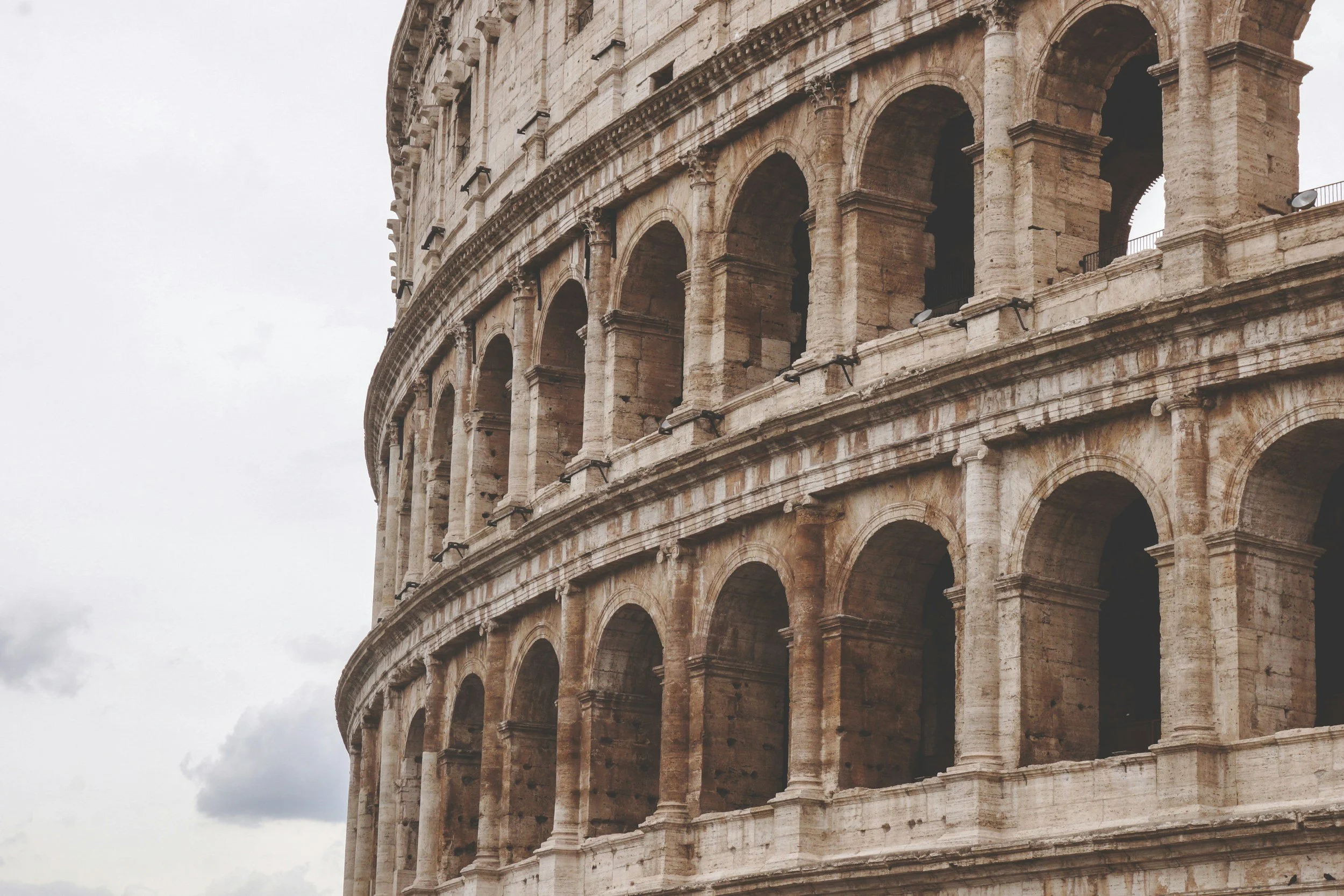
“Roman life reflected a structured hierarchy. Social classes determined opportunities, education and rights, resulting in wealthy citizens enjoying political influence and intellectual training, while the poor lived in crowded housing and worked in labour-intensive jobs.”
At the center of Roman life was a commitment to discipline, logic and order, which were qualities that helped them administer a vast empire but also that intensified the social stratification within it. Their legal system was a major intellectual achievement, yet it primarily served property owners and the ruling classes. Their military machine relied on carefully structured hierarchy and strict obedience, reflecting the broader Roman belief in rational organisation over emotional or communal values. This Roman preference for structure, law and centralised authority profoundly shaped the modern Western world, influencing everything from legal systems and political institutions to city planning and cultural ideas of “civilisation.” Together, this combination of left-brained thinking, institutional control and entrenched inequality produced a society that was extraordinarily influential yet fundamentally divided, shaping both the brilliance and brutality of the Roman world.
The Romans practiced a form of colonialism recognisable by modern standards, in that they conquered territories, imposed Roman law and governance, extracted taxes, took slaves and resources, settled Roman colonists, and promoted cultural assimilation through “Romanisation.”
As their empire expanded across Europe, one of the groups most directly affected by this imperialism were the Druids. So, who were the Druids?
The Druids
Druids were the indigenous religious, legal, and intellectual elite of Celtic societies in Gaul, Britain, Ireland and parts of Iberia. In a world where Celtic communities were decentralised across many tribes and regions, the Druids provided a vital source of unity through shared beliefs, customs, and cultural memory. Entirely native to the Celtic tradition, they served as priests, judges, healers, advisors, and guardians of oral knowledge, forming a leadership class that connected diverse peoples across vast territories. More than spiritual figures, they were political strategists and cultural stewards (advisors to kings, keepers of law, and organisers of resistance) making them the intellectual backbone and guiding force of Celtic life.
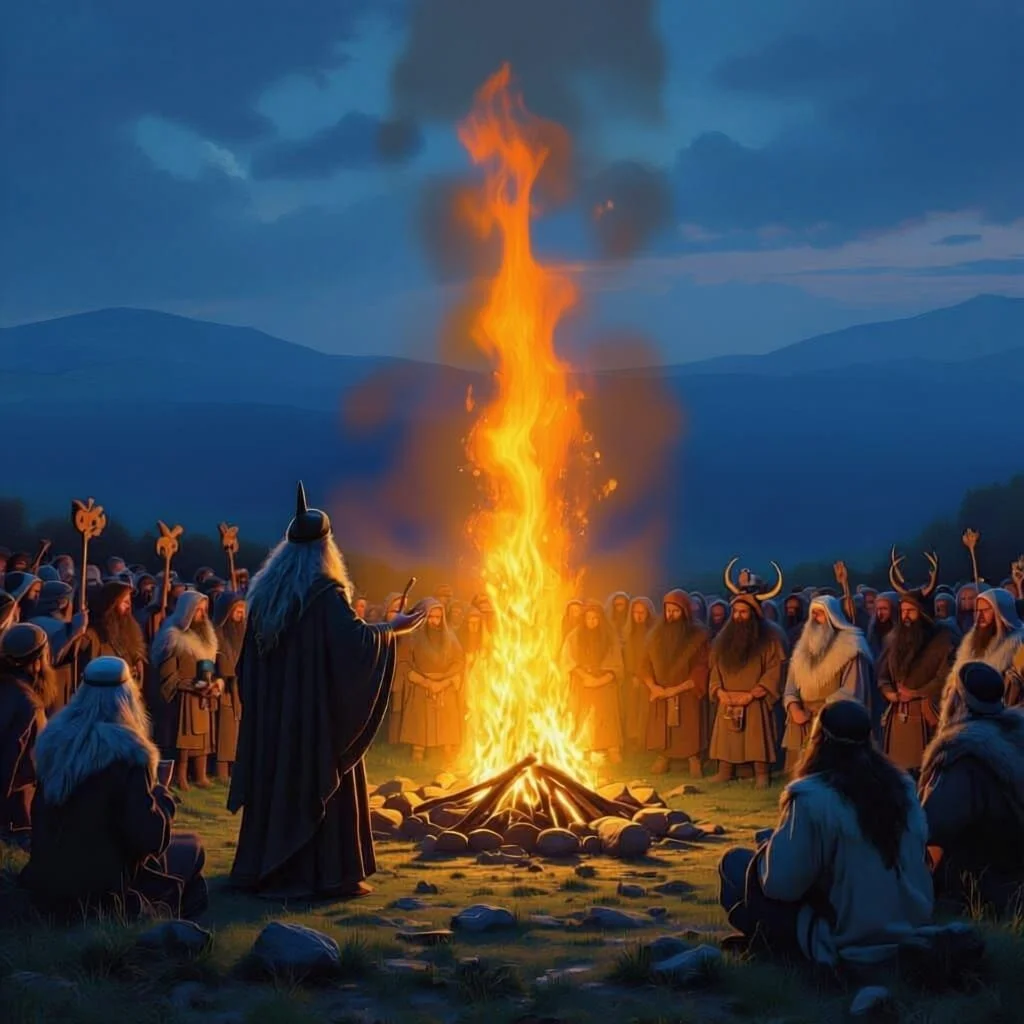
“Druids were priests, judges, healers, advisors and guardians of oral knowledge, forming a leadership class that connected diverse peoples across vast territories. They were political strategists and cultural stewards (advisors to kings, keepers of law, and organisers of resistance) making them the intellectual backbone and guiding force of Celtic life.”
The Druidic way of life formed the spiritual and intellectual foundation of Celtic society, built on a deep connection to nature, tradition and communal responsibility. Druids acted as astronomers, philosophers, healers, teachers of law and ceremonial leaders, usually specialising in four main areas, which were Ceremony, Herb Craft, reading the stars, and communicating with the spirit world. Their training was rigorous, sometimes taking 20 years, because they were expected to memorise laws, genealogies, stories and rituals that defined the identity and continuity of their people.
Sacred groves, rivers, and natural landmarks were their sanctuaries, places where they believed the divine was woven into the land itself. To the Druids, “God was in nature,” and they maintained a stewardship of, and an education about, the natural world. Their ethical code centred on balance, reciprocity and the maintenance of social harmony. As mediators, counsellors, and ritual specialists, they ensured the equilibrium of both community and cosmos. Their authority blurred the boundary between religion and governance, creating a society where political decisions were shaped by spiritual insight. Because Druidic status was earned through knowledge rather than inherited privilege, they formed a kind of meritocratic elite, offering stability and continuity across the otherwise decentralised Celtic world.
In Ireland, Druids upheld Brehon Law, the island’s indigenous legal system, which shared Druidic values of balance, fairness, and restoration. Unlike punitive systems, Brehon Law sought to repair harm through compensation, property adjustments and agreements designed to restore relationships. It addressed land rights, contracts, fosterage, marriage, and social obligations with remarkable sophistication. Over time, professional jurists known as Brehons continued this legal tradition, preserving and reciting its principles to ensure consistency across generations. Justice was deeply communal, reliant upon mediation and consensus rather than the authority of a monarch.

“Sacred groves, rivers, and natural landmarks were their sanctuaries, places where they believed the divine was woven into the land itself. To the Druids, ‘God was in nature’.”
One of the most striking features of Brehon Law was its relative commitment to social equality, especially when compared with Roman or later medieval legal systems. Although Celtic societies had ranks and classes, the law recognised the rights of individuals across these divisions in unusually progressive ways. Women could own property, inherit wealth, initiate divorce and receive compensation for harm, which were rights often denied elsewhere in the ancient world. Contracts were binding regardless of gender or class and even kings were subject to legal accountability, reflecting a cultural belief that no one stood above the law.
Throughout the Celtic world, the Druidic way of life placed knowledge, fairness and balance at its centre rather than domination or rigid hierarchy. Through their spiritual authority and legal expertise, Druids fostered a cultural framework where wisdom held more power than force, and where social harmony mattered as much as political strength. This community-centred approach was driven with empathy, and valued the intuitive and healing arts and the feminine. The qualities of compassion and nurturance, reverence for the earth ‘mother’ and the profound awe for the natural world, were rooted in ‘right-brain’ thinking and this was the way that indigenous peoples had lived for thousands of years before the Romans came.
Changing Tides: Rome vs. Druid
Because the Druids embodied a powerful cultural, religious, and political force in Gaul, Britain, and Ireland, Rome viewed them as the leadership core of anti-Roman resistance. Roman commanders understood that conquering territory was relatively easy, but conquering culture was difficult, so they deliberately sought to eliminate the Druids in order to dismantle Celtic identity and its networks of opposition, by removing their strategic leadership, breaking their morale and erasing their unifying spiritual authority.

“Throughout the Celtic world, the Druidic way of life placed knowledge, fairness and balance at its centre rather than domination or rigid hierarchy.”
By targeting the Druids, the Romans could more easily replace indigenous legal traditions with Roman law, impose Roman religion and emperor-worship throughout Celtic lands, and elevate local elites who aligned themselves with Roman interests rather than traditional leaders. This strategy was central to Rome’s broader plan of assimilation and control, ensuring that conquered populations were governed not only by force but by reshaped cultural and social structures.
And, as the Roman Empire expanded its power across Europe, it brought with it rigid social hierarchies, entrenched sexism, and widespread slavery, imposing an imperial order that contrasted sharply with many aspects of earlier Celtic social systems.
A Choice
During these hundreds of years, those who were alive during this huge upheaval had to make personal choices. Do we choose to align ourselves with this new oppressor, or do we choose to resist in order to retain our own customs and ways of life?
Many chose to resist, to retain a love of the land, an honouring of all that was sacred, a bond with each other that valued kinship and community. And that meant a rejection of the ways of the Romans, and with that, the coin, small round pieces of silver with the heads of emperors stamped onto them, that the Romans brought with them in their conquest across Europe.
Some Celtic and other tribal groups resisted Roman-style coinage as a deliberate statement of independence and cultural identity. By the late Republic, coins were not just money but symbols of political authority and Roman influence, so adopting Roman-style coins often signalled allegiance or cooperation. Archaeological evidence suggests that in areas further from Roman roads and garrisons, the refusal to adopt coinage often coincided with military resistance and a conscious rejection of Roman economic and political norms.
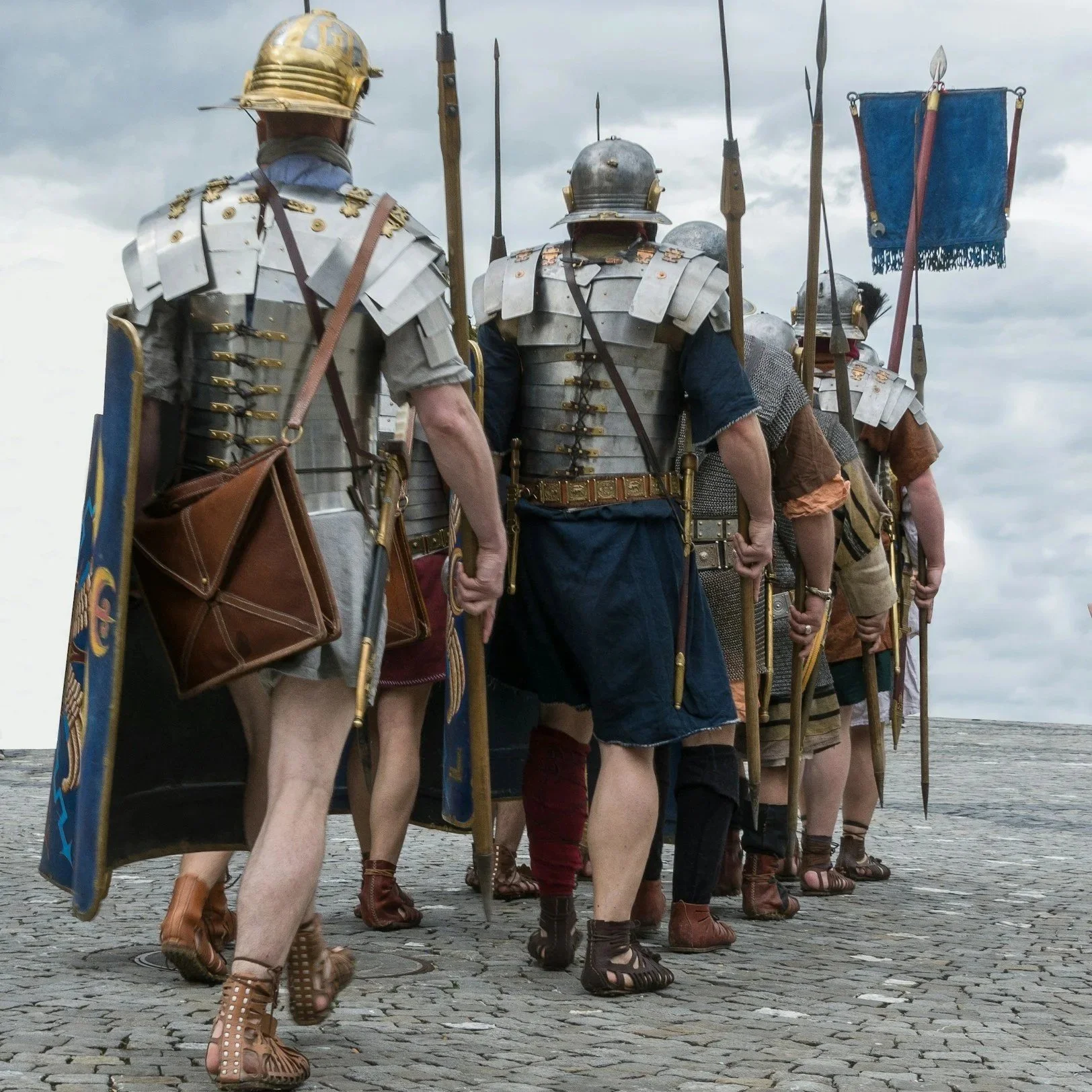
“As the Roman Empire expanded its power across Europe, it brought with it rigid social hierarchies, entrenched sexism, and widespread slavery, imposing an imperial order that contrasted sharply with many aspects of earlier Celtic social systems.”
In some cases, as acts of resistance to the Roman domination, people loyal to the old ways took a ‘vow against the coin’, and while that may have been magnanimous in that lifetime, the difficulty with vows is, energetically, they tend to remain beyond the lifetime in which they were made, unless the phrase ‘until death do us part’ is included in the intention.
Vows
Serious vows and intentions leave energetic imprints in the subtle body, which can persist and influence future incarnations until they are consciously resolved. This means that the “lifespan” of a vow is measured by its energetic resonance and influence and not physical time, meaning that it can persist across lifetimes until consciously addressed.
Resolution is possible in ceremony, by asking the body (which contains the energy body that contains the vow imprint) to identify, honour and release binding vows, made in another lifetime, that continue to affect a person’s life, that are ‘not serving’ that person now.
If you have a vow against the coin in your energy system, you will find money elusive, hard to attract or repellant. You may not know that you have that vow in your system, but you may be aware that money (the coin) seems ‘difficult’ for you, or that your relationship with money has never been steady and strong. If this resonates with you, especially if you have an appreciation for a more respectful relationship to the earth and a more equality and heart-focused outlook on life, doing the clearing work around it may be the work needed to change your relationship with money. And even if you are not sure if this applies to you or not, doing the work around it won’t do any harm.

“If you have a vow against the coin in your energy system, you will find money elusive, hard to attract or repellant.”
Uncreate a Vow Against the Coin
To uncreate a Vow Against the Coin, if you feel drawn to do that work, open ceremony with a candle, smudging or intention, call in your Helping Spirits and ask that they bear witness to your breaking of the vow that no longer serves.
Recognise that any vow that was ever voluntarily made by you is also available to you to be voluntarily uncreated. Recognise that the vow to reject the coin in Europe when the Romans came and slaughtered Druids and the druidic life, was done to align with the old system of reverence for the earth and the feminine (the earth, women, community, emotions, etc.). The vow was intended to reject the Romans and their way of life and we could not have known then that finance would become such a normal part of our modern world. Recognise that solemn vows can last lifetimes. Uncreating that vow is done by saying, with reverence and intention, the following statements three times: “I uncreate every vow that I ever made that rejects the coin. I welcome the power of money, abundance and wealth in my life. I am grateful that money, abundance and wealth powerfully energise my life in a good way. I receive and give money in a good way.”
Repeat the entire process two more times on different days. Notice any shifts that happen each time. To close, ask the Helping Spirits to clear the energy in the room left by the departing energy that detaches from the energy field and then say: "I call on Archangel Michael to pour the Light of God into me, to replace the energy that has been removed and I call on Archangel Raphael to Seal My Grid.” Then thank the Helping Spirits and say, "I ask Archangel Michael to close sacred space".
It is ideal, but not essential, to have a strong relationship with your helping spirits before you do this work.
Blessings to all on the path.