

In the run-up to the holidays, the cultural volume around family becomes louder, shop windows sell images of closeness and reconciliation wrapped in fairy lights.
For many people this imagery ignites gladness and gratitude. For others, not so much. For those who are estranged from their families, or still embedded in a family shaped by narcissism and unresolved trauma, the festive season can be a painful time of year. You may feel grief for people who are still alive. You may have been gaslit into doubting your own memories. You may feel guilt alongside relief, longing alongside anger. Alongside the Hallmark versions of reality, trauma, narcissism and estrangement are reality for many people.
Why is narcissism so pervasive? Because trauma is pervasive. And trauma in childhood can result in that child shutting down their nervous system by disassociating or shutting down empathy or shutting down attachment in order to survive. And a child without a strong sense of self, or whose heart has been shut down, can become narcissistic.
We know that narcissism is not something with which people are born. It is forged in childhood, shaped by emotional neglect, shame, fear, or the absence of safe attachment. Understanding this context does not excuse harm, but it helps us to see the full picture without judgement and may help us identify if we have been impacted by this cycle of abuse.
Narcissism as an Adaptation to Trauma
Narcissism is often misunderstood as arrogance or self-love, but actually, it is usually the opposite. Beneath narcissistic behaviour there is frequently a fragile sense of self that never had the chance to develop safely. Without that sense of self, there is no ‘protective shell’ for ‘the person’ to arrive into, and thus, the narcissist finds a way through by developing an external self instead.

“The adult may appear confident, or morally superior, but these behaviours often function as armour around a frightened, emotionally arrested inner self. Because this inner emptiness cannot be soothed from within, it must be managed externally, through control, admiration, usefulness or dominance.”
Psychiatrist Bessel van Der Kolk (author of ‘The Body Keeps the Score’) has said that Donald Trump is a narcissist.
A child who grows up without reliable emotional attunement must adapt. If vulnerability is punished or ignored, the child learns to hide it. If love is conditional, the child learns to perform. If the child exists to meet a parent’s emotional needs, their own inner world is pushed aside. Over time, an internal belief forms that being ordinary, needy or flawed is dangerous and narcissistic traits develop to protect the person from shame and annihilation.
The adult may appear confident, controlling, charming or morally superior, but these behaviours often function as armour around a frightened, emotionally arrested inner self. Because this inner emptiness cannot be soothed from within, it must be managed externally, through control, admiration, usefulness or dominance.
Clinical psychologist Dr Ramani Durvasula defines the narcissist as someone who “derives their sense of self-esteem from external sources such as their physical appearance, career, relationships and accomplishments, rather than from an internal sense of self. They lack a genuine sense of self and seek constant validation and admiration from others.”
When these external sources of validation are threatened, the individual often reacts with defensiveness, rage, withdrawal or contempt. This dependence on validation is one of the most consistent markers clinicians look for when identifying narcissistic patterns. In psychiatry the definition of Narcissistic Personality Disorder (NPD) in the DSM-5, includes an ‘exaggerated sense of self-importance, a lack of empathy, a strong sense of entitlement, preoccupation with fantasies of success and power, a need for excessive admiration and a tendency to exploit relationships’. These traits show up across contexts and over time, meaning diagnosis requires repetition, rigidity and lack of accountability when harm is pointed out.
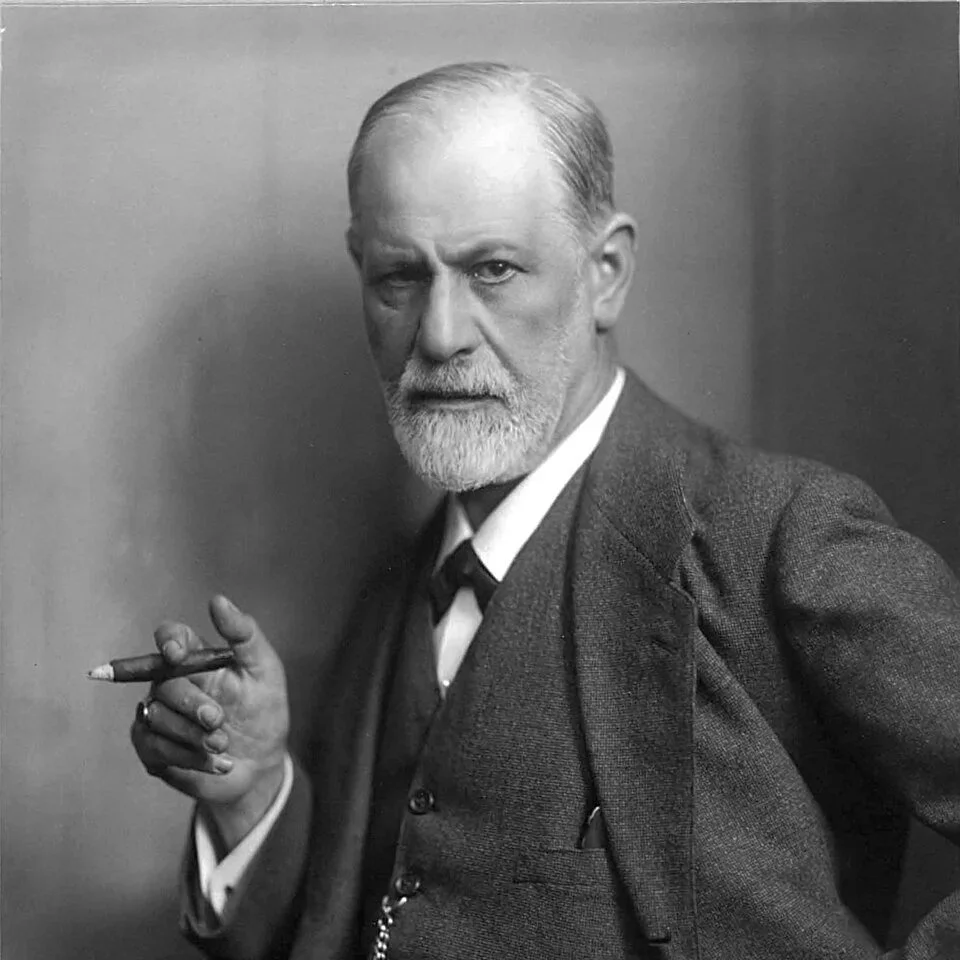
“Sigmund Freud wrote about narcissism as a condition in which emotional energy remains overly invested in the self because early relational needs were not
safely met.”
Drawing on research into emotional intelligence, psychologist and author Daniel Goleman has written about the narcissist’s consistent difficulty with empathy. This does not always mean a complete absence of empathy, but rather an inability or unwillingness to prioritise another person’s emotional reality when it conflicts with the narcissist’s needs or self-image. As a result, they may appear oblivious to the impact of their behaviour, dismiss others’ pain, or reinterpret situations in ways that centre themselves as justified or wronged.
Earlier psychoanalytic thinking, which still informs modern clinical understanding, framed narcissism as a disturbance in development rather than a character flaw. Sigmund Freud wrote about narcissism as a condition in which emotional energy remains overly invested in the self because early relational needs were not safely met. Contemporary trauma-informed psychiatry expanded on this idea, recognising that narcissistic traits often emerge as adaptations to environments where vulnerability, dependence or emotional authenticity were unsafe. From this perspective, clinicians identify narcissism not only by outward behaviour, but by the underlying fragility, shame, sensitivity and fear of emotional exposure that drive it.
Because of the difficulty in sustaining relationships based on mutual recognition, rather than control or validation, narcissism does not exist in isolation. It requires a relational system.
The Narcissistic Family System and Its Roles
In families organised around the narcissist, individuals are not related to as whole people, instead they are assigned roles. These roles stabilise the system and protect the narcissistic core from exposure, accountability or emotional collapse. Children do not choose these roles, they are shaped into them.

“The scapegoat carries the family’s disowned pain and are blamed and criticised or labelled as ‘difficult’. Often they are the most perceptive or emotionally honest member of the family, which makes them threatening. Scapegoats are usually the ones who leave or are pushed out.”
The golden child exists to reflect success, virtue, or superiority back to the narcissistic parent. Love is abundant but conditional, dependent upon loyalty and performance. Independence or dissent often results in sudden devaluation. The golden child may appear privileged, but their identity is tightly controlled.
The scapegoat carries the family’s disowned pain. They are blamed and criticised or labelled as “difficult”. Often they are the most perceptive or emotionally honest member of the family, which makes them threatening to the system. Scapegoats are frequently the ones who eventually leave or are pushed out, becoming estranged because they refuse to absorb the family’s unresolved trauma.
The lost child survives by disappearing. Their needs are unmet so consistently that they learn not to have them. They stay out of the way, avoid conflict and often grow into adults who struggle to feel real or visible.
The parentified child or caretaker becomes emotionally responsible for others. They soothe, mediate, anticipate and sacrifice. Their usefulness is rewarded, but their own needs are neglected. In adulthood, this often leads to exhaustion, resentment and difficulty receiving care.
The mascot uses humour, charm or lightness to deflect tension. Pain is minimised or laughed away. While this role appears adaptive, it suppresses grief and authentic expression.

“The covert or vulnerable narcissist may appear sensitive, insecure or self-effacing. Underneath, there is often deep resentment, passive aggression, and an expectation that others should intuitively meet their needs.”
These roles may shift over time, but the system resists anyone stepping outside their assigned function. When someone does, the family often reacts with hostility, guilt or exclusion.
Different Expressions of Narcissism
Narcissism does not look the same in everyone. Some expressions are overt and easily recognised, while others are subtle and confusing.
The grandiose narcissist presents as confident, dominant or charismatic. They seek admiration and control, react poorly to criticism and often feel entitled to special treatment.
The covert or vulnerable narcissist may appear sensitive, insecure or self-effacing. Underneath, there is often deep resentment, passive aggression, and an expectation that others should intuitively meet their needs.
The victim narcissist organises their identity around suffering. Their pain is real, but it becomes a tool to avoid accountability and to induce guilt in others. They are perpetually wronged, misunderstood, or unappreciated.
The communal narcissist seeks validation through goodness, morality or helpfulness. They may appear altruistic while privately being controlling or emotionally coercive.
The malignant narcissist combines narcissistic traits with cruelty, aggression or the enjoyment of others’ distress. This presentation is the least likely to change.
Many people show narcissistic traits without meeting clinical criteria. What matters is not the label, but the impact on those around them.

“Over time, the partner of someone living with these dynamics will find their own self-trust, emotional safety and sense of self-worth eroded.”
Across different expressions of narcissism, certain patterns recur. Reality may be denied or rewritten, leaving others confused and doubting themselves. Responsibility is deflected through projection, blame or moral superiority. Relationships are managed through triangulation, pitting people against one another to maintain control. Affection may be intense and overwhelming, then abruptly withdrawn. Boundaries are ignored or punished. Attempts at honest conversation often lead to rage, collapse or silence. Apologies, when offered, are hollow or conditional. Over time, the partner of someone living with these dynamics will find their own self-trust, emotional safety and sense of self worth eroded.
Living with Narcissism
Survival within a narcissistic family often begins long before physical distance is possible. Emotional survival may involve learning to grey-rock, limiting what you share or disengaging internally even while remaining present. It may mean recognising that reasoned explanations will not lead to insight and that being understood is not a prerequisite for protecting yourself.
If you are still in contact with abusive family members, boundaries may need to be quiet and strategic rather than confrontational. You are allowed to withhold information, reduce exposure or choose emotional neutrality as an act of self-preservation. Abuse does not need to be dramatic to be real. Chronic invalidation, control and erosion of autonomy are legitimate reasons to protect yourself.
Family estrangement is rarely impulsive. It is usually the final step after years of trying to explain, endure, repair or forgive. It represents not a lack of love, but the recognition that ongoing contact is causing harm.
The grief of estrangement is complex and often invisible. There is grief for what happened, grief for what never existed, and grief for the fantasy of who family members might one day become. Holidays intensify this grief, while society offers little acknowledgment, language or permission to express it. Surviving the abuse and estrangement requires allowing yourself time to grieve. Missing people does not negate the harm they caused and relief and sadness can coexist.

“If you are able to question yourself, feel concern about how you affect others and sit with discomfort without immediately blaming or withdrawing, change is possible. This means noticing when defensiveness arises, when control feels safer than closeness, or when your sense of worth depends on being admired, needed or right.”
If You Recognise Narcissistic Traits in Yourself
If parts of this resonate uncomfortably because you see them in yourself, it does not mean you are irredeemable or beyond change. Narcissistic traits are often learned adaptations, formed in environments where vulnerability was unsafe and connection was unreliable. Many people carry some of these traits at different points in their lives, particularly under stress, loss or threat. Traits are patterns of behaviour or coping strategies, not a fixed identity.
Narcissistic Personality Disorder, by contrast, refers to a pervasive and rigid pattern that is stable across contexts and time and that significantly impairs relationships and self-reflection. What distinguishes a disorder from traits is not severity alone but flexibility. People with traits can usually feel remorse, reflect on impact, tolerate feedback and adjust behaviour, even if it is uncomfortable. A personality disorder involves a much deeper difficulty with empathy, accountability and internal regulation, often accompanied by intense shame that makes change feel psychologically dangerous.
If you are able to question yourself, feel concern about how you affect others and sit with discomfort without immediately blaming or withdrawing, those capacities matter, because they suggest that change is possible. Change begins not with shame, but with curiosity and responsibility. This means noticing when defensiveness arises, when control feels safer than closeness, or when your sense of worth depends on being admired, needed or right.
Healing usually requires support. Trauma-informed therapy, particularly those that address attachment and shame, can help develop an internal sense of safety that no longer relies on external validation or control. Repair is possible when accountability replaces justification, listening replaces self-protection and when empathy is authentic rather than performative.
You are not responsible for the wounds that shaped you, but you are responsible for how you relate to others now. That responsibility is not a punishment, but instead it is an opportunity to not put upon the next generation or your partner the harm that was put upon you.

“Rituals of grief, such as lighting a candle or writing unsent letters, can help honour what was lost without reopening the door to more harm.”
It is possible to hold two truths at once: people who cause harm are often deeply wounded, and your healing does not require you to remain in harm’s way.
Healing From Narcissistic Abuse
Healing often requires validating your own reality after years of it being dismissed. This may involve trauma-informed therapy, education about narcissistic systems, or connection with others who understand these dynamics. Healing may require that we choose the family we want to hold onto, based on mutuality rather than obligation, and we otherwise prune the family tree.
At the Holidays, survival may mean redefining the season entirely. You are allowed to opt out of traditions that hurt. You are allowed to rest, to keep the day small, or to treat it as any other day. Rituals of grief, such as lighting a candle or writing unsent letters, can help honour what was lost without reopening the door to more harm. And, importantly, healing does not require forgiveness, reconciliation or continued access to you. Compassion for someone’s trauma does not require sacrificing your own wellbeing.
If the holidays hurt this year, you are not failing at gratitude or resilience, you are responding normally to abnormal relational conditions. Estrangement and distance are not evidence of coldness, instead they are often acts of courage.
You are allowed to choose safety, dignity and peace. And you demonstrate healthy behaviours for your children when you do.