

New Year arrives with a familiar weight of expectation for change. It presents itself as a clean slate, a turning point, a moment when we are invited to become the person we have been postponing. We tell ourselves that this will be the year that we change our health, our finances, our relationships, our sense of purpose.
The calendar flips, and January feels like the edge of a cliff, as though meaningful change requires a bold leap and a reinvention of who we are.
If, by the end of the month many of those resolutions have quietly fallen away, we can interpret this as a personal failure, but the truth is far kinder. Most resolutions fail not because we lack discipline or character, but because we ask for too much change, too quickly, and in ways that ignore how human beings actually grow.
So, first we’ll look at ‘How’ to make change and then we’ll look at ‘What’ changes we want to make to get the course corrections that we want in the year to come.
How to Implement Change
We are drawn to sweeping change because it promises us relief. If everything could change at once, perhaps the discomfort we carry could disappear overnight. But change framed as a sudden leap creates pressure, and pressure almost always produces resistance. When a goal feels overwhelming, the nervous system responds by pulling away. We procrastinate, rationalise or tell ourselves that we’ll begin when circumstances improve or when the motivation arrives.

“Lasting change rarely begins with drama. It begins with a willingness to start where we are, to move incrementally, and to act even when motivation feels absent.”
Resolutions collapse because they require us to become a different person, without allowing for the gradual process of becoming. We can commit to exercising daily, cutting out entire food groups, saving aggressively, communicating flawlessly or managing our emotions with calm maturity. But these are not just lifestyle changes, they are identity changes and all identity changes work the same way. Changing identity must happen in an organic, natural way, or our bodies will put up enormous resistance because it feels threatened and a (non-beneficial) ’healing crisis’ can occur. Identity must change with small adjustments, in incremental ways.
Incremental change is often misunderstood as lowering standards or thinking too small, but the opposite is true. Sustainable growth happens through repetition rather than intensity. One small action, repeated consistently, reshapes identity far more effectively than a dramatic, intensive effort that requires struggle to be maintained.
The Five-Minute Rule and the Power of Beginning
One of the simplest and most effective tools for change is the five-minute rule. When you are avoiding something you know would be good for you, commit to doing it for just five minutes. Simply begin, and reassess once those five minutes are over.
The power of this approach lies in how it lowers resistance. The mind often rebels against large commitments, but it is surprisingly willing to tolerate something small. Five minutes feels manageable, even when motivation is low.

“When you are avoiding something you know would be good for you, commit to doing it for just five minutes. Simply begin, and reassess once those five minutes are over.
This approach lowers resistance.”
Consider exercise. Telling yourself that you are going to the gym can be enough to trigger avoidance, because it comes loaded with effort, time and expectation. Instead, you might tell yourself that you are simply going to put on your gym clothes. Once dressed, you can see if you are willing to take the next step, perhaps leaving the house or getting into the car. Each action is small enough to feel non-threatening, yet meaningful enough to create momentum.
Often, once you begin, continuing becomes easier than expected. Movement generates energy, clarifies intention, builds momentum and can even generate motivation. Even when five minutes is all you manage, something important has shifted, you have shown up for yourself, kept a promise, however small, and in so doing you have strengthened trust in your own capacity to act. Building in this way is also incremental, which means that it’s more sustainable as an identity shift.
Why Waiting for Motivation Rarely Works
Believing that we need to feel motivated before doing is one of the most reliable obstacles to change. Motivation is influenced by mood, energy, sleep, stress, hormones and circumstance. If action depends on motivation, progress will always be inconsistent.
In practice, motivation more often follows action than precedes it. Beginning creates evidence that change is possible which builds confidence and confidence, in turn, fuels motivation. Waiting to feel ready tends to reinforce doubt and inertia.

“In practice, motivation more often follows action than precedes it.”
This doesn’t mean ignoring intuition or pushing through genuine exhaustion. There is an important distinction between resistance that arises from inertia or fear and resistance that signals misalignment or the need for rest. The practice is not about forcing yourself forward at all costs, but about learning the discernment to know when to gently persist, and when to listen more closely to what your resistance may be telling you.
What Change Do You Want?
Authenticity
Meaningful change must be rooted in authenticity. Without honesty about where you are and what you truly value, even the most well-intentioned goals will fall apart. This is because authenticity is easier to maintain than something that is not in alignment with who you truly are. In fact, holding yourself to a standard that is inauthentic to who you are is exhausting. Authenticity means acknowledging your limits as well as your desires and setting goals that reflect your actual priorities, rather than the expectations you have absorbed from culture, family or comparing yourself to others.
Living authentically often brings a sense of relief, but it can also be uncomfortable. Telling the truth about who you are and what you want may disrupt familiar patterns and challenge relationships that were built on accommodation or silence. Authenticity does not always create immediate harmony, but over time it weeds out superficial peace, prunes the social or family tree and replaces them with relationships of mutual respect and emotional clarity.
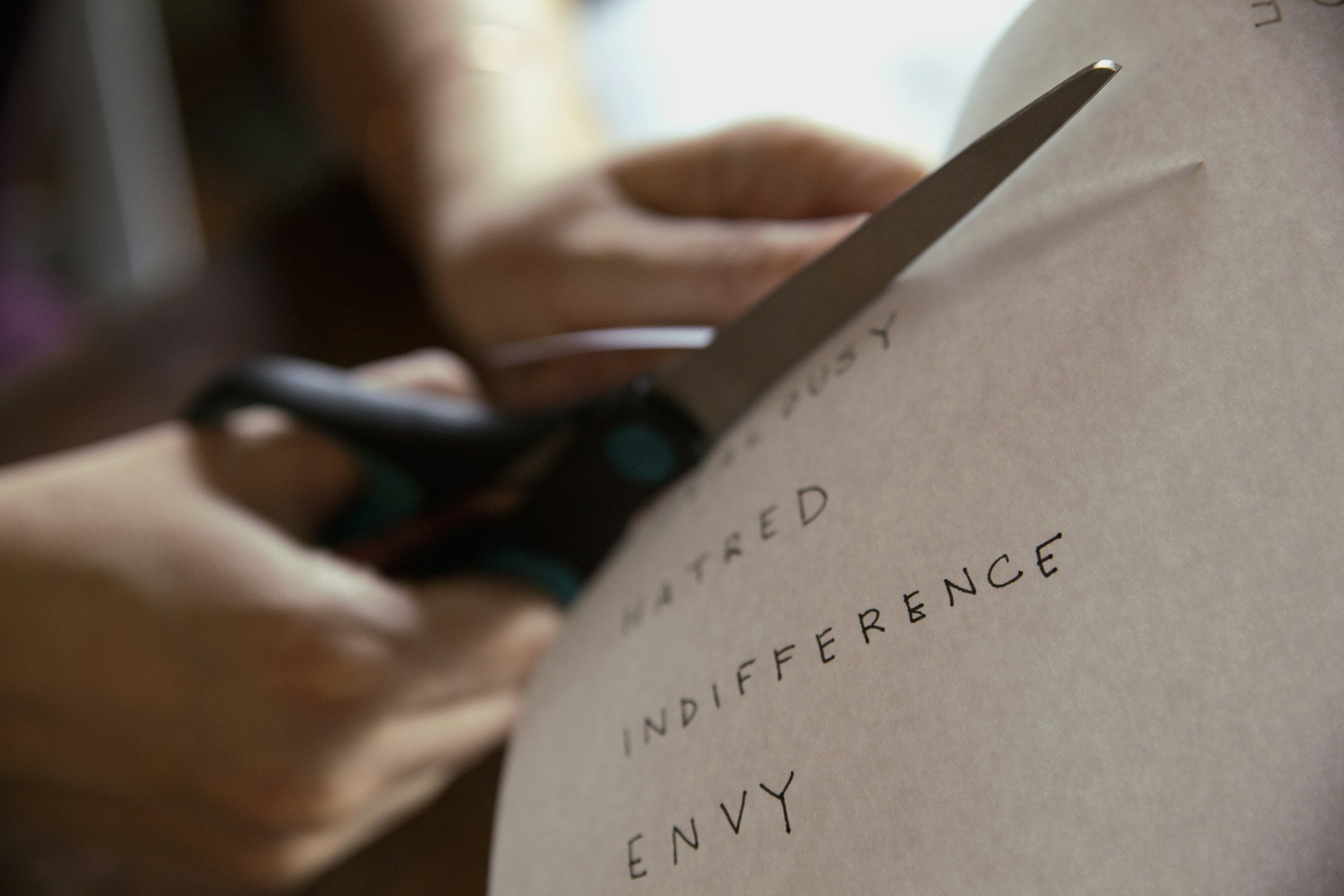
“Living authentically can be uncomfortable. Telling the truth about who you are and what you want may challenge relationships. Over time authenticity weeds out superficial peace, prunes the social or family tree and replaces them with relationships of mutual respect and emotional clarity.”
Authenticity also deepens presence. When you stop performing, you become more available to your own experience and to the people around you. This presence is often what others respond to most. Authentic people are not admired because they are flawless, but because they are real. They listen more openly, respond more honestly and create spaces where genuine connection can grow. Authenticity isn’t rare, but it is a highly valued human trait.
Relationships & Conflict
Nowhere is authenticity and presence more important than in our closest relationships. Over time, many couples find themselves circling the same conflicts, often centred around money, sex or domestic tasks. While these issues appear practical on the surface, they are rarely just about logistics. They tap into deeper emotional needs around safety, value and recognition.
When arguments escalate, it is often because both people are arguing from their own (younger) wounded selves. We are every age we have ever been and we carry emotional memories from earlier experiences of feeling unseen, criticised or unsafe. In moments of conflict, those reactions can surface quickly, long before our adult reasoning has a chance to intervene.
When this happens, the goal quietly shifts from understanding to winning, but realising what is actually at play can soften the conversation. If you can see your partner’s defensiveness as vulnerability rather than hostility, and recognise your own reactions in the same light, the dynamic shifts. Suddenly, the dynamic becomes less about being right and more about staying connected.

“When arguments escalate, it is often because both people are arguing from their own (younger) wounded selves. We carry emotional experiences of feeling unseen, criticised or unsafe. In moments of conflict, those wounds can surface quickly, long before our adult reasoning has a chance to intervene.”
Life is not about winning arguments. It is about loving well, and love requires the courage to remain open even when old wounds are activated.
And for those of us who are parents, or who influence children in meaningful ways, authenticity and presence carry an added weight. The conversations you have with your children, and perhaps more importantly the way you have them, will echo forward. The feelings the child has will be remembered by that child when you set the tone, when you listen to them and how you handle mistakes. Those feelings the child has will shape how they communicate in their own relationships later in life and in how they communicate with their own children.
Making Meaning From suffering
Life does not distribute its challenges evenly. Some people face loss, illness or hardship earlier or more intensely than others. What shapes a life is not the hand you are dealt, but the choices you make thereafter. Painful experiences carry the potential to deepen empathy and understanding because when you’ve lived it, you understand it. With healing and reflection, what once felt solely damaging can become a source of insight and knowing, enabling you to support others with that knowing, in ways that, without your previous suffering, would have been impossible.
This does not mean suffering is inherently good or that ‘everything happens for a reason’. It means that meaning can be forged from experience and that living through difficult times can expand your capacity for connection and compassion.

“A rich life is not measured by targets or accumulation, but by the depths of our relationships, the depths of our understanding, and the depth of our presence.”
Choosing a Richer Life
Choosing healthier life goals can extend our lifespan somewhat, but by choosing to have more meaning in our lives, we can profoundly enrich the quality of our lives. A rich life is not measured by targets or accumulation, but by the depths of our relationships, the depths of our understanding, and the depth of our presence.
These qualities are cultivated through presence, authenticity, vulnerability and connection. They require a willingness to engage with life as it is, to meet yourself where you are and inviting these qualities into our lives in honest ways.
When these values are prioritised, regrets tend to soften. In reading studies of people, on their deathbeds, discussing the regrets they had in their lives, they tend to regret the things they did not do, rather than the things that they did. They describe regretting the moments they missed because they were distracted, misguided or fearful. Doing the desired thing and messing it up was more comfortable in the long term than never trying to do the thing in the first place.
Perspective and the Practice of Presence
There is a saying that if a regrettable thing will not matter in five years, it doesn’t matter (as much as we think it does now). This idea helps lift us out of absorption with daily pressures and reconnect with perspective. Having perspective invites presence.

“Presence raises our consciousness and helps us to transcend the ‘everyday’ and move into a more profound relationship with life. We get to ‘see’ more clearly, to understand life and how we grow and how to ‘Be’.
And as you raise your consciousness others around you are impacted.”
What is presence? Eckhart Tolle describes presence as the state of being fully anchored in the Now, where attention is no longer dominated by compulsive thinking about the past or future but rests in direct experience of what is happening. In this state, identification with the ego loosens, because the ego depends upon mental stories to survive. Presence does not eliminate thoughts or emotions, but changes our relationship with them, allowing us to observe them, rather than be driven by them. Much human suffering, in Tolle’s view, comes from unconsciousness, from reacting to life through accumulated emotional pain rather than meeting the moment as it is.
By bringing awareness to the body, the breath and the immediate sensory experience, we interrupt these automatic patterns and create space for awareness. Presence is the acceptance of the present moment internally. In relationships, presence shows up as deep listening and reduced reactivity, often dissolving conflict by refusing to engage old emotional patterns. Presence is the practice of returning, again and again, to direct experience, where clarity, compassion and authentic connection naturally arise.
Presence is not achieved through insight alone. Like anything learned, it is a practice, renewed repeatedly. We drift, we forget and we return. Each return is itself an act of presence.
Presence raises our consciousness and helps us to transcend the ‘everyday’ and move into a richer, more profound relationship with life. We get to ‘see’ more clearly, to understand life and how we grow and how to ‘Be’, with more awareness in the world.
And as you evolve and raise your consciousness, not only do you improve your relationships, your health and your sense of meaning in the world, you also help others too, because we contribute to the resonance of the energy field we all live in by being in it.
Blessings to all on the path!