

The world watched as a ceasefire was agreed in the Middle East.
As someone who grew up in a war-zone, and witnessed first-hand the (life-changing) peace process, I have a few things to say to those watching and hoping that peace will sustain from recent events.
Firstly, the bad news. There are no guarantees that these steps towards peace will be successful. And don’t take the headlines for guidance. One step forward doesn't necessarily mean success, but similarly, two steps back isn't failure. It's a process, stick with it, the overall trajectory can be positive.
And the good news. I witnessed a seemingly intractable war become peace in my own country. I grew up in the war in Belfast, and became accustomed to fear and foreboding. Every other day, for 30 years, there were bodies found, atrocities committed. Gunmen, shooting up a bar of football supporters, shouting “trick or treat” as they murdered innocents. Bombers, resistant to the peace process, placing a bomb in a small town square, killing 31 people. Government agents, fed intelligence files and supplied with weapons, were responsible for the deaths of countless civilians.
There is no doubt that, historically, the war was as a result of the overhang of colonialism and the ‘Wars of Religion’ that had raged throughout Europe in the 1500-1600’s. Those historical divisions of Protestant vs Catholic, became proxies for England vs Ireland, and the loyalties that were born of that. Colonialism became personal for communities throughout the north of Ireland as innocents were swept up in the divisions of hatred that committed the most heinous of crimes.
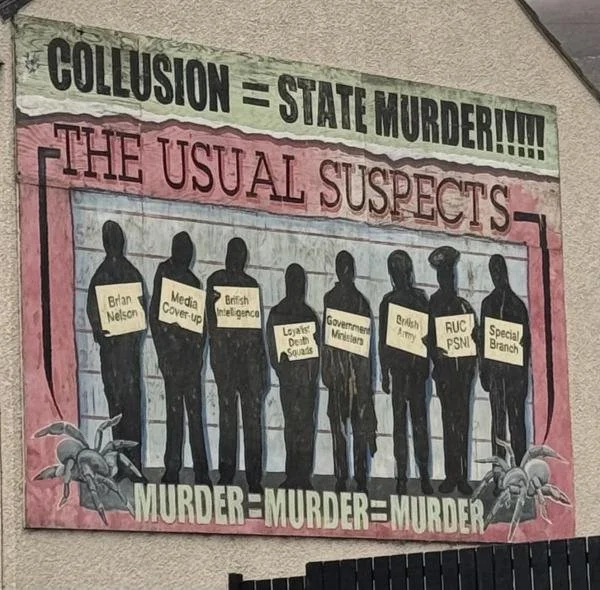
“British government agents, given MI5 intelligence files and supplied with weapons, were responsible for the deaths of countless civilians.”
In the north, generations of sectarianism became a mindless, ravaging “dirty war” that saw two players on the field, but within a political context that was largely controlled by a third party behind the scenes; a third party that controlled the judiciary, legislature, and social infrastructure, but also that crucially fed money, intelligence and munitions to the player on the ground who supported its agenda. The same is true for Palestinians.
And at the heart of all of it was “the other”. Any kind of hatred cannot endure without an ‘other’ group, upon which to project blame, fear and dehumanisation, to justify its cruelty. Without that imagined enemy, hatred has no anchor and cannot sustain itself.
The Nazis exemplified this logic. Their ideology depended on defining Jews (and others) not merely as different, but as subhuman, a category that cast an entire people outside the bounds of empathy or moral concern. By stripping Jews of individuality and humanity, the Nazi regime could rationalise their persecution, violence and genocide as acts of purification or defence rather than murder. This process of “othering” transforms prejudice into policy, allowing hatred to endure, and belittles morality and the sanctity of life.
During the Peace Process, I worked in the Irish Parliament in Dublin. As the negotiations struggled on, the incendiary list of atrocities that 'the other' did to my people was so foremost in my mind that it was hard to see a way through. The lengths to which the British Government had gone to subjugate and murder innocent civilians, under the guise of ‘war’, was so treacherous and done with such impunity, that, as a nationalist living through that, what was done by the Irish felt like “defence”, “warranted”, “unavoidable”. In a war that was so heinously executed, with a military intelligence and societal infrastructure to support it, there seemed no way out. Many people looked away to ‘get by’, many fought the systems and lost, many denied that war was inevitable or necessary. Today, many still deny that violent reaction was needed, that the militants who fought on behalf of an oppressed people weren’t ‘representative’ or that there had to be ‘another way’. My opinion of that (understandable) view is that whomsoever holds it, didn’t experience enough suffering under the regime, or that their hope was gone under the strain. Not that violence is an end in itself. Martin Luther King Jr. is credited with saying, “violence begets violence, hate begets hate, toughness begets toughness.” And it’s true. But when the imbalance in power is so enormous, and seeing the oppression for the immovable force that it is, sometimes that means wanting a different life for your children. The turning point comes when the oppressed realise, in the absence of help from international quarters, or the Irish government or the Irish people in the south who had won their freedom in their own back yard, that the path ahead is a lonely road. And so ‘the Troubles’ was a lonely time for an oppressed people who knew their history, were politically savvy and understood that the vilifications against the Irish people by the British establishment were propaganda intended to support an unjust regime. And so it is for the Palestinians. And the beautiful thing about the human condition is that once you are denigrated enough that the oppressor wants you dead, you resist.

“Nobody in the world, nobody in history, has ever gotten their freedom by appealing to the moral sense of the people who were oppressing them.”
— Assata Shakur
It was the US civil rights activist Assata Shakur who said, "Nobody in the world, nobody in history, has ever gotten their freedom by appealing to the moral sense of the people who were oppressing them.” And as the revolutionary Irish republican, Bobby Sands, said: “We have no choice but to resist, our oppressors leave us none.”
Injustice Begets Resistance
It is exactly because the oppression was so all encompassing that surrendering to it would have felt like a living death, an erasure of our identity and an agreement with the oppressor that we had no right to exist. The urge to fight against that is part of the human condition, enormous, much like the physical instinct to survive. And that is the crux. Bombing a people into submission does not work. You can kill the people, but unless you wipe them out entirely and they have no-one to avenge their deaths, the next generations will mourn their dead and seek justice. You can kill huge numbers of the people, but that only makes the survivors yearn more for freedom from oppression. And to quote Sands again, he said: “You cannot put a rope around the neck of an idea”. War begets war. And justice begets resistance.
And the unpalatable truth is that Israel will never be “safe” from her Arab neighbours (with her current ‘annihilator’ policies) until she wipes them all out entirely, all of the people in all of the Arab countries. Impossible, unless the US says yes and all other western countries agree. It won’t happen. And then there is China, and the tilt of the power shift between the West and the East. It’s currently a slow burn, but it’s happening and given the political-social issues happening in the US now, with the demise of the dollar, it might shift quickly.
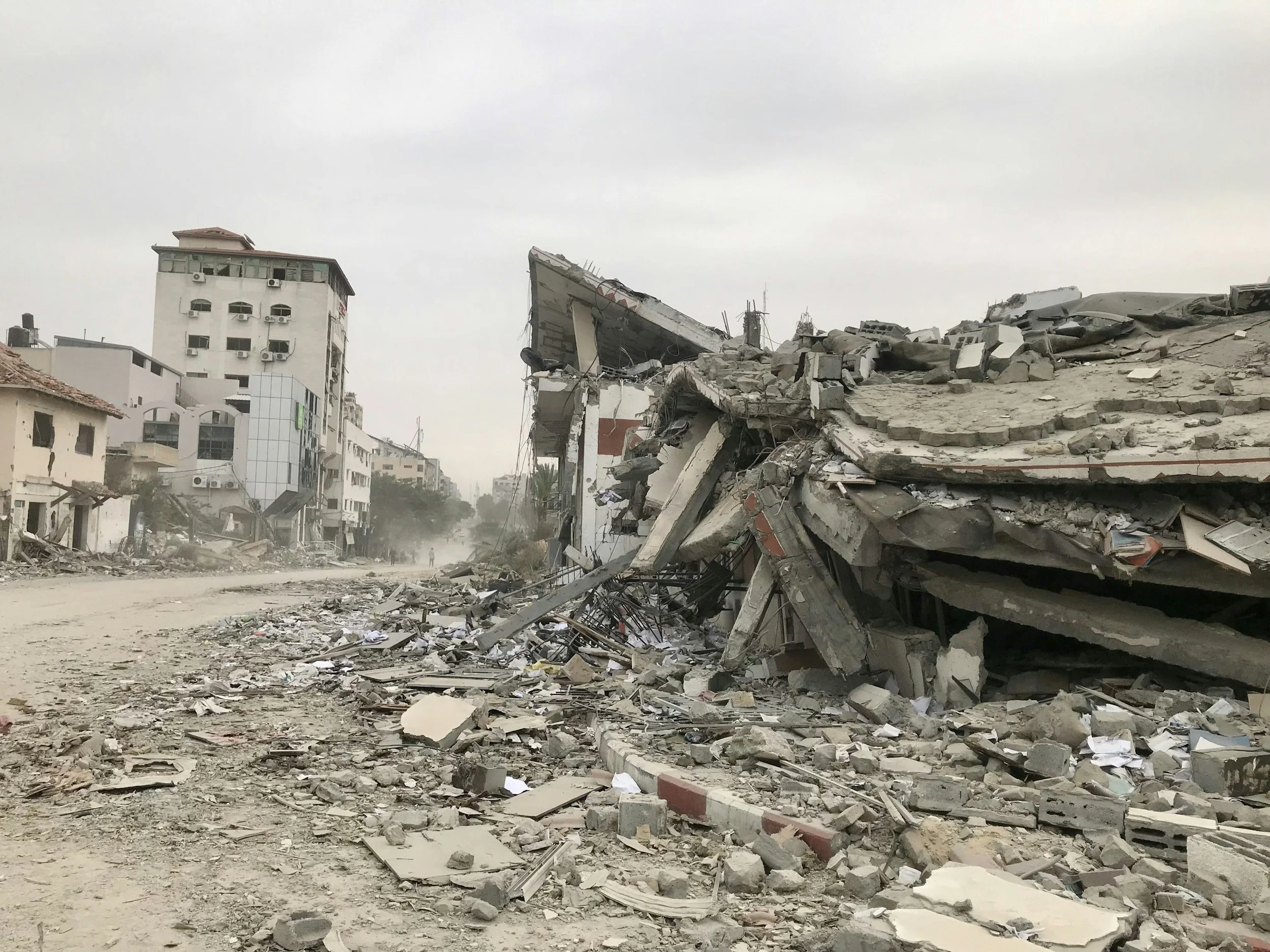
“The unpalatable truth is that Israel will never be ‘safe’ from her Arab neighbours while she bombs the bejeezus out of them.”
Western Opinion is Changing
The issue in the Middle East is not a Jewish problem, or an Arab problem, but it is a West vs the Global South, problem.
It is no coincidence that the vast majority of countries in the Global South recognise the state of Palestine. By Global South, I mean Africa, Asia, Latin America and the Arab world, etc.
But that norm is changing. Last month alone, the United Kingdom, Canada, Australia and Portugal officially recognised Palestine, joining Ireland, France, Spain, Norway, Slovenia, Luxembourg, Malta, Monaco, Andorra, and Belgium, signalling a growing consensus across the West.
The recognition of the state of Palestine is nominal in itself, but it signals a shift from traditional Western alliances, largely because of the Western-supported Israeli Defence Forces onslaught against the Palestinian people in recent years.
Yes, recognising the Palestinian state is not the same as fighting for a beleaguered people. But the shift away from the ‘global political elite’ mindset has already begun (see Canadian Prime Minister’s Davos speech) and the ‘might makes right’ prowess that accompanied that mindset has started to wane. Donald Trump has been instrumental in the dismantling of the American fortress. And that’s a good thing.
It’s important to notice that global shift in favour of protecting the rights of Palestinians, because of the atrocities carried out by the IDF under the direction of the Netanyahu government, originates from the electorates, not the elected. The spotlight of public opinion is, possibly for the first time historically, upon Israel and what is happening at her behest to the Palestinians and public marches against the war have taken place all over the world.

“The spotlight of public opinion is, possibly for the first time historically, upon Israel and what is happening at her behest to the Palestinians and public marches against the war have taken place all over the world.”
Ceasefire, then Peace Process
In short, the ceasefire is welcome, but that is not a peace process. This international public focus will help encourage a peace process to occur, but so far, there has been no acknowledgment from elected officials that securing the rights of Palestinians is a key part of the work ahead.
The average Israeli (73%) believes that either the military response against Hamas has been “about right” (39%) or that it “hasn't gone far enough” (34%). Only 19% think it has gone too far, with Israeli Arabs being more critical, with 74% saying the response has been excessive.
A peace process will require support from the electorate in Israel, if it is to survive and secure a lasting peace, and that will require political guidance from her elected officials.
Presuming that the US puts sufficient pressure on Israel to navigate a peace process, the difference between a failed process and a lasting peace is for the Palestinians to lack the need to resist Israeli influence in their lives. Currently, Palestinians live under military rule, while Israeli settlers live under Israeli civilian law, creating a dual legal system. And Palestinians overwhelmingly regard Israeli settlements (that are illegal under international law) as a mechanism for Israel to expand its borders, complicating the creation of a future Palestinian state.

“As difficult and as entrenched as this conflict has been allowed (and encouraged) by the West to be, it is not unsalvageable. But every peace process that has ever succeeded required justice and equality to be at their core.”
Palestinians have had thousands of their homes demolished, or faced evictions, to make way for settler takeovers in both the West Bank and East Jerusalem. The UN and human rights organisations, such as UN OCHA, B’Tselem and Human Rights Watch describe these actions as violations of international law, especially in the occupied territories. Israel claims these demolitions and takeover of Palestinian homes as legal under Israeli law (e.g., for building without permits or for “security reasons”), but Palestinians and many international bodies view them as part of systematic displacement.
For any peace process to succeed, this injustice needs to be rectified.
As difficult and as entrenched as this conflict has been allowed (and encouraged) by the West to be, it is not unsalvageable. But every peace process that has ever succeeded required justice and equality to be at their core. And that is what is needed now in the Middle East.
Specifically, Israel needs to acknowledge that the Occupied Territories are illegal and that the 1967 borders are the correct borders for its country. Israel argues that the 1967 borders were not “final”, but many international peace plans, including the Oslo Accords, the Roadmap for Peace, and UN initiatives, all assume the 1967 borders as a starting point for any two-state solution.
The US Role in Peace
This war, acknowledged as one of the most divisive in recent times, has shown the world that the US-Israel ‘arrangement’ alone decides the fate of the Palestinian people.

“For any peace process to succeed, this injustice needs to be rectified.”
That this should be the case should shock and horrify most people, but in the West, it doesn’t. In the West, there’s a semblance of normalcy about it and that is on purpose. The ‘special relationship’ between the Israeli government and the US government, that has enabled and paid for decades of suffering, is largely met with ‘explanations’ and pacifying comments about Israel’s right to defend itself, which while true, don’t justify the massacre of tens of thousands of innocents in collective punishment.
Resistance to this arrangement has largely not come from the West at all. Officially, the EU, the UK, Australia, NZ, Canada and the US have been slow to acknowledge a Palestinian state and were slow to decry the human rights abuses of the people of Gaza and the West Bank in this latest round of Israel ‘mowing the lawn’.
The truth is, the conflict reflects an entitlement that the West has taken for itself globally, often at the expense of the colonised and subjugated in the Global South. For Donald Trump to see this, and to use his influence to remove Israel’s entitlement to control the Palestinians and their land, is so unlikely, that any ‘peace process’ over which he presides is most likely set to fail. The injustice meted out to a subjugated people, and the entitlement Israel has been allowed to demonstrate with impunity, are at the core of the issue in the Middle East and so must be central to negotiations towards a lasting peace.
Hope
But, while (in my opinion) Donald Trump is no statesman and is incapable of securing a lasting peace in the Middle East, there is hope.

“The conflict reflects an entitlement that the West has at the expense of the Global South. For Donald Trump to see this, and to use his influence to remove Israel’s entitlement to control the Palestinians and their land, is so unlikely, that any ‘peace process’ over which he presides is most likely set to fail.”
During the peace process in the north of Ireland, it was not just (some of) the elected officials who steered the process, it was also the wider international community. The attention and support of the Irish, UK, US governments and community support networks that had pushed for peace developed momentum and media traction. The international community also played a significant role in helping to overthrow the apartheid system in South Africa. We all have a role to play in the movement towards peace. Injustice anywhere is everybody’s business.
Growing public sentiment about the Middle East is effectively what will result in a lasting peace. The public outpouring of solidarity with the Palestinian people is what has ignited Western elected officials to act. To imagine that politicians can be relied upon on their own to deliver peace in our time is a mistake.

“Our revenge will be the laughter of our children.”
— Bobby Sands
Our world is changing. Colonialism is no longer acceptable and an ‘ally-ship’ has begun to push for equality across all borders, and factions of society. This makes our ally-ship with the people of Palestine essential in that push for equality and peace.
Without a peace process, the dead are avenged by the next generations. In a peace process, the dead can be avenged, not in bloody murder, but in vindication. The tide of history is turning. As Bobby Sands wrote from prison, “Our revenge will be the laughter of our children.”