

For an 11-year-old, Fionnán had no interest in the things of boys his age. He could throw a saiget farther and with more precision than most boys in the village, even those with hair on their faces, Fionnán’s slender frame belying hardened, smooth arms and legs of strength.
But, beyond that, climbing trees and understanding the pathways of insects was of limited value to him. Instead, he had a fascination for the vast night-time sky, the stars and planets, how they moved, and, he was sure, how they talked to each other. Fionnán would beset the local Druids as they moved about their business in the woods and with the people in the village below. He felt sure he would be called to be one of them one day and he wanted to know everything that they knew.
The Druids were the keepers of wisdom, learned and skilled in the healing arts, poets and advisors to kings, and who were the holders of ceremony and rites, who communed with the spirits that lived among us. Usually dressed in simple robes, they were humble men, aware of the great mysteries of life, and our place within it. They were patient with Fionnán. They expected children to be curious, but it was the boy’s fascination with the sky when the sun disappeared, that gave them the most joy. Most children were concerned with smaller things that the Druids would call ‘mouse’ matters; children’s eagerness to belong, petty squabbles at play, even adornments they had made that adults would applaud on festive days. These the Druids called ‘allurement with the stream of life’, not necessarily bad in itself, but a distraction away from the sacredness of life, of its emanation from within, and of us being aware of it and present within it. ‘Mouse perspective’ was a distraction that the Druids knew pulled awareness into the weeds, preventing growth, and occasionally they would warn against it, should it seem that it had taken hold. Children, it seemed, needed especial guidance to be wary of the follies of pettiness, lest they never grew up.
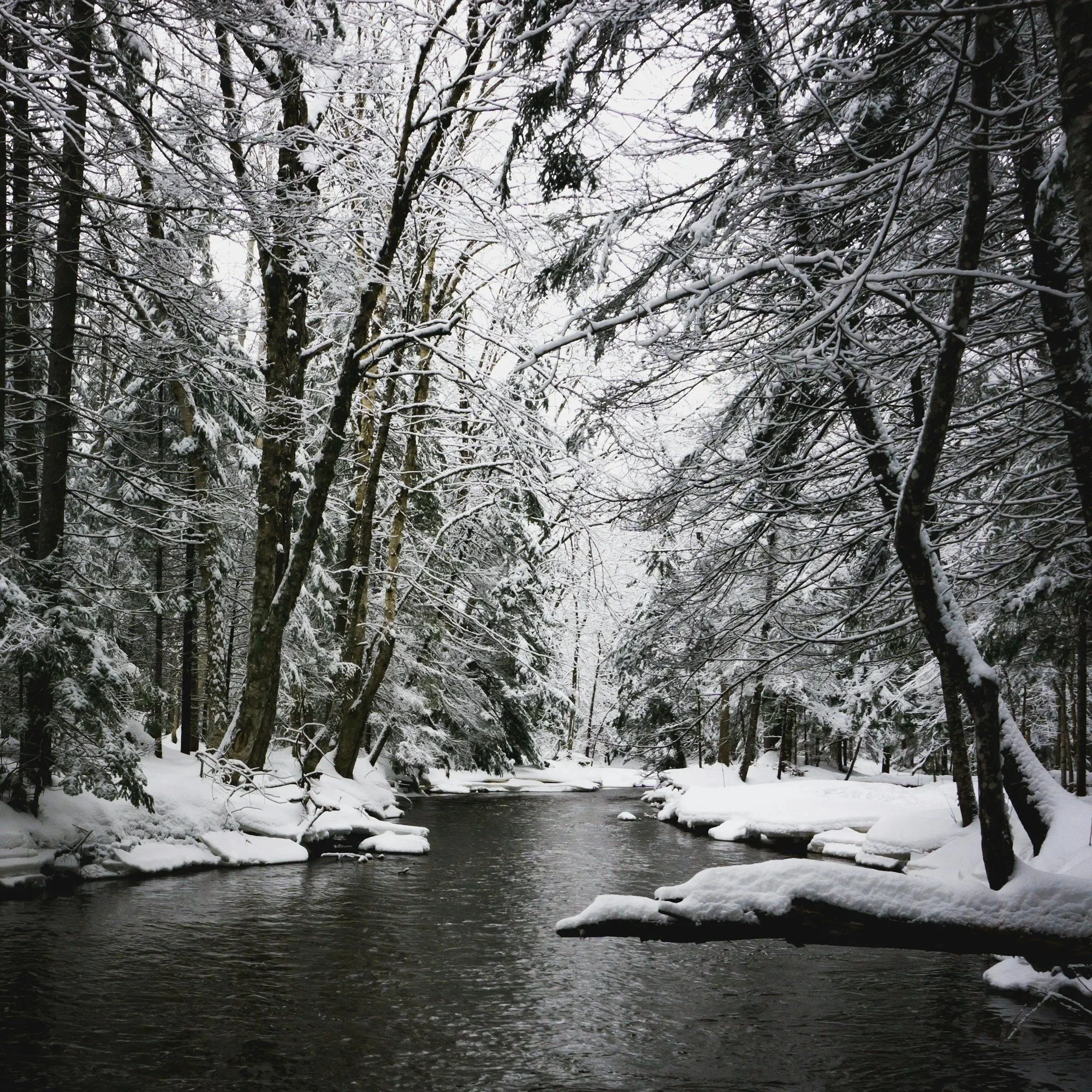
“Fionnán knew that not all the stars moved, and that as we fixed upon the immovable ones, we could measure our planet in motion and, as it did, so our seasons changed.”
Fionnán needed no such warning. He found that the tedium of life belonged in ‘mouse matters’. ‘Belonging’ was for those who needed placement to know that they were alive, squabbles were for those who needed power to feel that they mattered, and children’s festive games were, well, just games; a waste of good daylight that could otherwise be used for questioning the Druids about the stars and planets that watched everything, bearing witness to all that is or ever had been.
Fionnán knew that not all the stars moved, and that as we fixed upon the immovable ones, we could measure our planet in motion and, as it did, so our seasons changed. He knew, too, how the druids measured the star and planet movements, in the year-cycle. With the warmest days of the year, when the sun was at its height in the sky, the days were longest. And in the coldest days, like now, when the trees would blacken and their leaves would become one with the soil again, the daylight grew shorter. It was during these short days, at mid-sun rise, that the sun was slung at its lowest in the sky, barely above the trees.
These things he knew, because he watched, but also because he had hung at the elbows of Druids, listening, while helping with tasks while they prepared for the ceremonies and festivals that marked the turning of the year, held in the village and beyond. The equinox ceremonies, the four main celebrations marking the times of the year when the earth turned, were celebrations and rites but this one was the most sacred. And in the listening, he would learn about the spirit of the seasons, and the specialness of this one, the sacredness that was here if we leaned in to bear it witness.
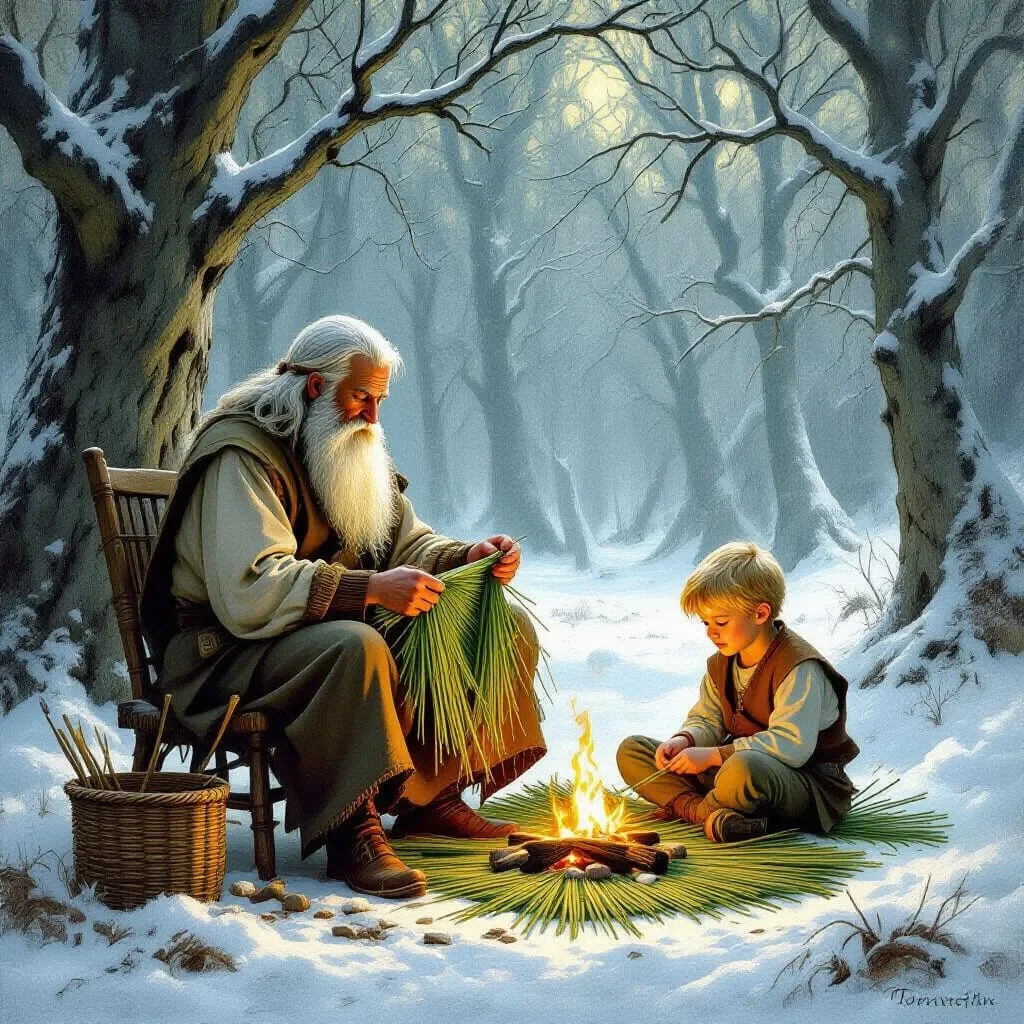
“When Fionnán found him in the grove, though, there were no festivities being prepared, and Cormac was alone, weaving rushes into soft blankets that one might sit or lie upon.”
The Master of Ceremony, Cormac, usually gave Fionnán the most knowledge when the boy pushed his way into the grove as it was being prepared, although he suspected it was to have him sated to allow the Master to proceed unhindered. When Fionnán found him in the grove, though, there were no festivities being prepared, and Cormac was alone, weaving rushes into soft blankets that one might sit or lie upon.
“Is there no celebration of the winter Solstice this year?”, Fionnán had asked, puzzled, trying to remember if there had been a celebration the year before. “Aah, come help me, Fionnán,” the old man had said, inviting the boy to sit beside him and weave the grasses as he was doing. Cormac, who had a white beard, long nimble fingers and kind, wise eyes, was sitting on a wooden chair beside a small fire that blazed inside a circle of small stones. The air was warm, considering they were outdoors in winter, with the densely packed, wide forest trees surrounding their clearing keeping out the cold wind. Fionnán sat beside him and lifted some long green rushes to smooth into smaller bundles and to wrap over and under each other as Cormac was doing.
“We had Samhain in October,” Cormac began, nodding to Fionnán to see if he remembered, “the large fire on the hill?” Fionnán nodded. “..To celebrate the end of harvest and the beginning of the recoil into winter, and we will have Imbolc in February, the beginning of life growing outward again. But the winter Solstice sits quiet between the two, at the out-breath expired, before the in-breath begins.” The pair were fixed on their work but Cormac’s words had a lilting air to them, with a kind of mesmerising affect. Fionnán eyes were steady on the green stems as he folded, but he felt as though the Druid was describing the winter Solstice as a place, not just a time of the year, and the more he listened, the more Fionnán was in that place, feeling every sense that Cormac described.
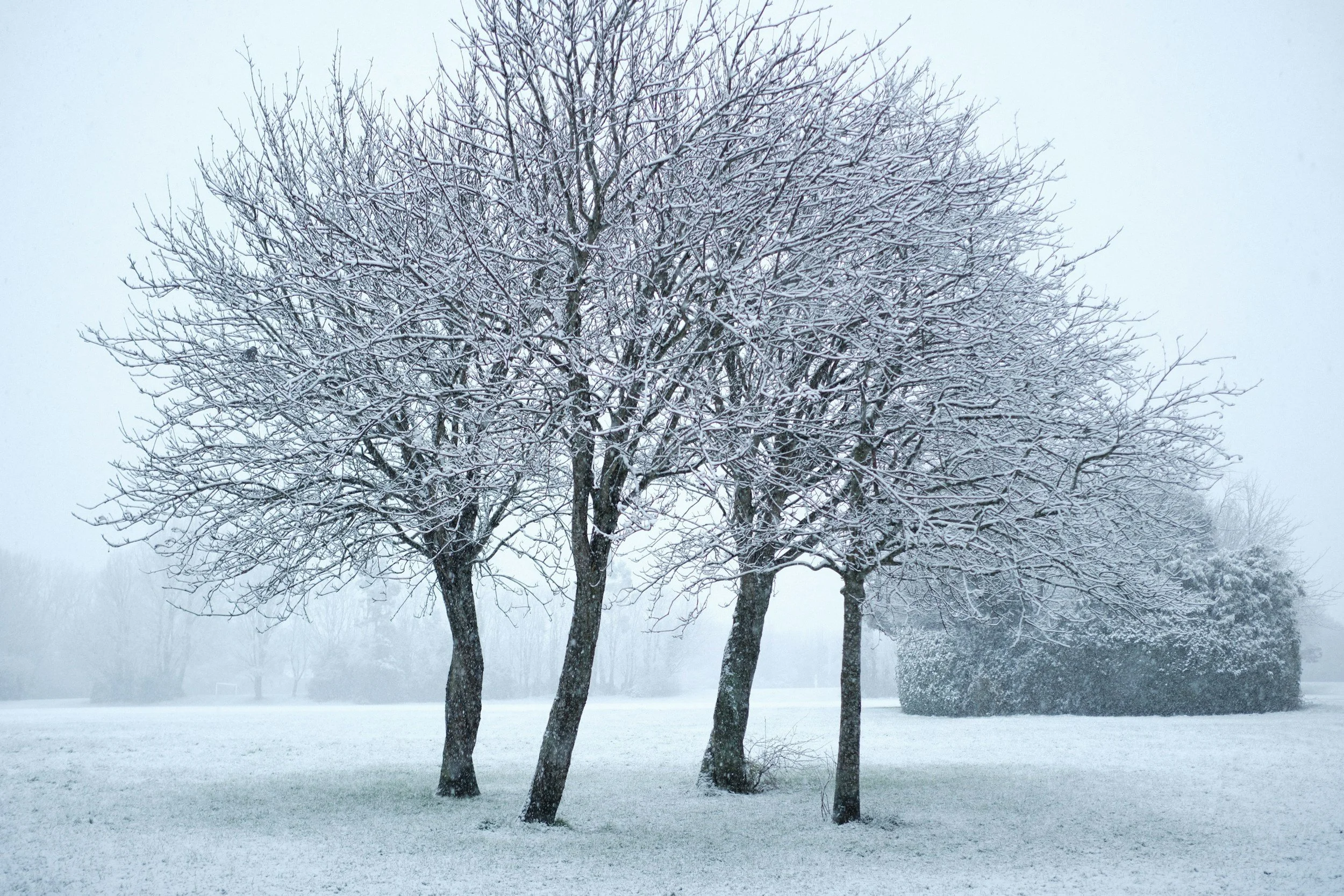
“‘The sacred land is empty now and the trees are shed. The plentiful giving of the land, has stopped and the earth has turned inward, to self-care, to nourish and compose. And we are quiet, with Her. When we are aligned with Her we thrive. When we hold Her sacred, we are in right relationship with Her.”
“The land, the sacred land, is empty now and the trees are shed,” Cormac continued. “The plentiful giving of the land, has stopped and the earth has turned inward, to self-care, to nourish and compose. And we are quiet, with Her. It is when we are most aligned with Her that we thrive. When we follow Her and hold Her sacred, we know that we are owned and are loved, we are in right relationship with Her. When we are not, we lose our way and forget the journey.”
Fionnán could feel the earth’s presence around him, coming up out of the ground, in the trees, cocooning them both as their understanding of Her turned to reverence.
“When the outer layers of leaves and fruits and colour are gone, we are not distracted by them,” Cormac continued. “Instead, in the stillness and dark, we sense the presence of life itself. This living, breathing earth is our Mother and we are held and nurtured by Her throughout the year. At this one sacred moment in the year, we turn to witness Her turned inward to nurture Herself.”
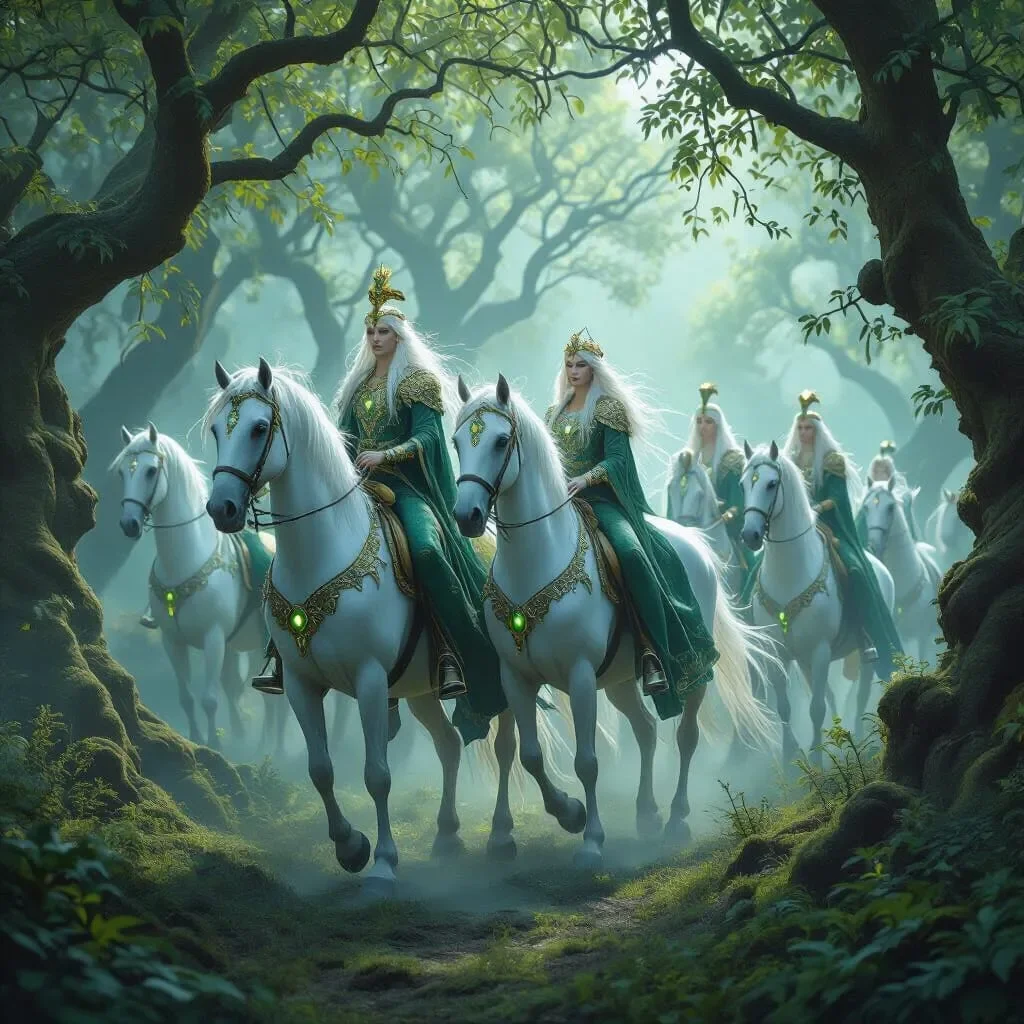
“Brú na Bóinne is more than a hollowed hill, it is a síd, a hallowed dwelling place of powers older than the land itself, where gods of the Tuatha Dé Danann live now.”
Cormac’s tone changed, his voice became slower, quieter and deeper. “Father-sun and Mother-earth are bound, and it is in this bond that the winter Solstice reveals the essence, the sacred nature, of that combined life-force. Life is the greatest gift we have, Fionnán. Life is only possible for us when the earth and the sun come together. One without the other, there is no green, there is no life. It is in the celestial dance between the two that life is born.
“The ancients knew this. They honoured the sun and the life that it gave that let the earth bloom. And at this time of the earth turning inward, the touch of that celestial life-force is not for us, or the trees, or the creatures of the forest. That light is for Her. She has mostly gone into the ground and is still. And the life-force within the light en-cloaks and penetrates the soil and stone, rivers and seas, and speaks calm words of love that nourish. It is a most sacred thing, Fionnán. And only when you are old enough to understand it, are you invited to enter the winter Solstice tomb, built thousands of years ago, to honour this sacred bond.”
Fionnán looked up from his weaving.
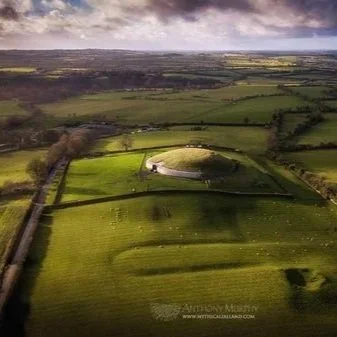
“‘The ancients built the stone tunnel and room beneath the ground, with its opening facing the solstice sun to capture the dawn’s first light. This light is precious on these sacred days, and it is potent and subtle. To breathe it in is to have it imbued into your essence.’”
— Photo by artist Anthony Murphy
“It is near the village. You have played at this fort with the long tunnel and stone room as a child and not known it’s significance. We call it Brú na Bóinne, the ‘Dwelling of the Boyne’, and it is a doorway to the otherworld. More than a hollowed hill, it is a síd, a hallowed dwelling place of powers older than the land itself, where gods of the Tuatha Dé Danann live now, and Óengus, the ever-young.
“The ancients built the stone tunnel and room beneath the ground,” Cormac explained, “with its opening facing the solstice sun to capture the dawn’s first light. This light is precious on these sacred days, and it is potent and subtle. To breathe it in is to have it imbued into your essence. Tomorrow is the first of the three sacred days. Do you want to be there at dawn for the first light essence in the stone room?”
Fionnán felt that he had been invited to an initiation of his own deep knowledge and he could only nod his head in reply.
Brú na Bóinne
Cormac held a lit torch aloft to light the way as he, Fionnán and eleven other villagers made their way to the mound before dawn. There were adults, but older children too, whom Fionnán had known all his life, but somehow in this solemn procession, he felt that perhaps he hadn’t known them at all, or that he was seeing them with new eyes.
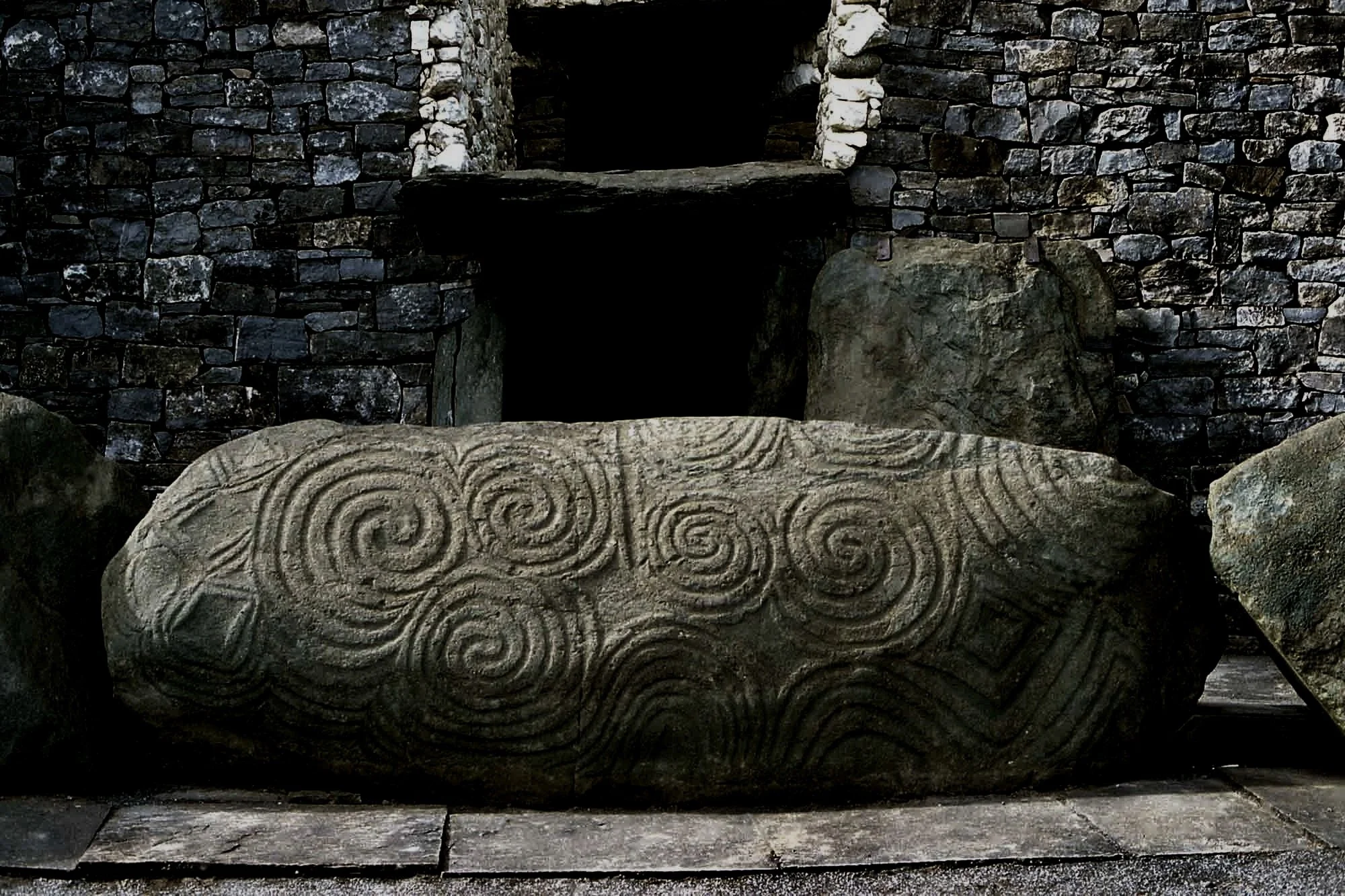
“A triple-spiral could be seen neatly carved into the enormous rock outside the doorway to the mound.”
A triple-spiral could be seen neatly carved into the enormous rock outside the doorway to the mound. Entering the narrow doorway, Fionnán felt the air change around him and the presence of something ancient that was at the same time both unnamable, but known.
Flags of stone lined the walls, ceiling and floor and Fionnán saw the triple-spiral etched in rock walls several times more before they reached the end of the tunnel. The small round stone room was only big enough for those who were there, but the ceiling above them was three times higher than Cormac, who was the tallest of them all, and it extended upwards in a stone spiral, becoming more and more narrow until it reached its pinnacle point.
Everyone found a seat on a grass mat and was settled before Cormac extinguished the torch. Fionnán sat among the villagers, old and young, in the deep darkness of Brú na Bóinne, feeling enclosed.
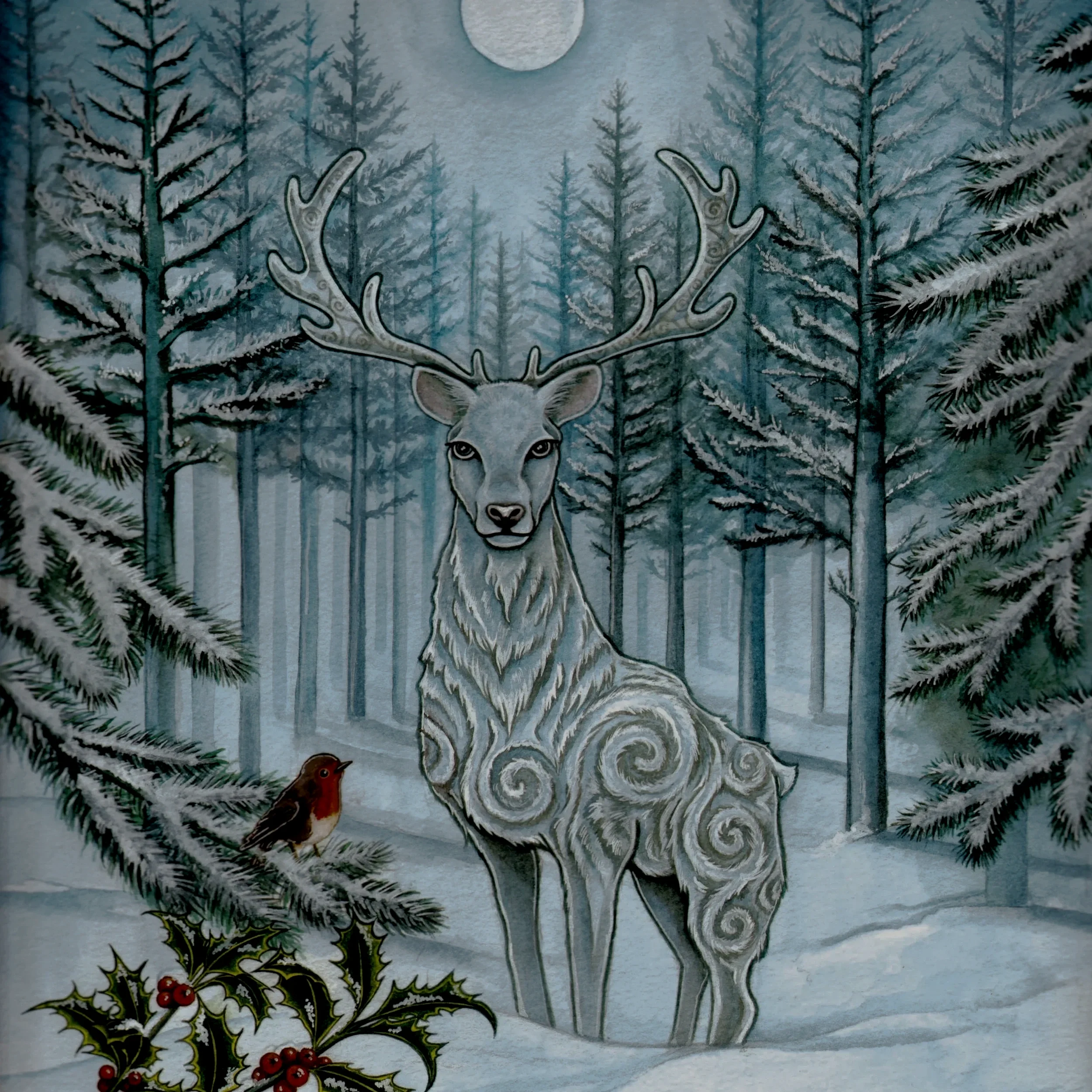
“Although it was the darkest, quietest moment of the year, Fionnán’s thoughts raced. The stag they had passed in the snow-fallen forest, perfectly still, watching the procession lit by a flaming torch.”
Although it was the darkest, quietest moment of the year, Fionnán’s thoughts raced. The stag they had passed in the snow-fallen forest, perfectly still, watching the procession lit by a flaming torch. Words from Cormac after agreeing to be here in this place now. “New birth and growth, intentions and longings, would be for a later time, but for the winter Solstice, it is a time to own what is. Truths that are known and unsaid, are welcomed to be.
“It is a sacred time, but not a celebration,” he said. “Instead, it is a time to remember the troubled, the owned but aching.. these are the belongings of the mid-winter Solstice. There are no words around these.”
The story Cormac told him of a woman in the village in the months afore, who had lost a young sickly child. She had keened and wailed, while the people of the village supported her, the first outpouring of grief had been loud and painful. Then came the quiet time, still raw, but not denying or fixing. “Now is the time to remember and know, to see what was and to own what was lost and to hold.. this is the holding time,” he had said. “This is not a time of action or rebirth, but of witness and keeping. There is healing in the quiet of the dark Solstice.”
Fionnán realised the woman who had lost her child was also in the room, to honour her loss, waiting with them all in silence.
Unseen by them, the black sky outside showed a pink-blue crescent mist on the horizon, as the sun slowly broke into the sky. A slender finger of sunlight crept into the inner left wall of the tunnel.
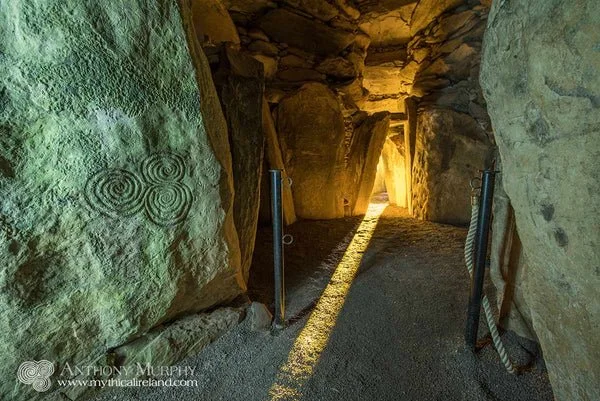
“A slender finger of sunlight crept into the inner left wall of the tunnel.”
— Photo by artist Anthony Murpy
“As that dawn-light is captured,” Cormac had said the night before, “into the room of the ancients, hold no thoughts and instead receive whatever is given to you. Whatever is meant for you will come. Receive it with gladness.”
The shaft of radiance crept farther towards them, more and more brightly, flooding the tunnel with glare and then into the stone room where they sat, illumining the tomb, that underground womb, into brilliance.
The space felt neither wholly of this world nor entirely beyond it. The stone basin glowed as if filled with quiet fire, and the walls held them and the ethereal light. Fionnán felt both young and ancient, small and large, as though the cycle that brought the sun into this space, after the longest night, also moved within him. He remembered to breathe in the light and the feeling grew more intense.
Fionnán felt the presence of every being who had ever been here over many thousands of years at this sacred time of year. The warmth on his face was faint, but the certainty it carried was deep. Brú na Bóinne stood outside ordinary time, where gods dwelled and still lingered, and to witness the chamber fill with light was to stand briefly where the worlds met and witness the profound and enduringly sacred.
Then words flowed into him, as though they were being spoken by someone or something outside of him. “The sun is a small star and all of the stars are connected with the earth, interweaving their love through the air and sea and land, creating what your druids call the ‘Fíod an Domhain’, or the ‘weave of the world’.. they name this also the ‘Fíodhnasc’, the ‘woven structure that binds all planes’. The ether, within which all belongs and is present, is this weave of the world. Absorb into you now, Fionnán, with every breath. You are bound to the land, the sea and the ether, it is in you and nurtures you and is you.”
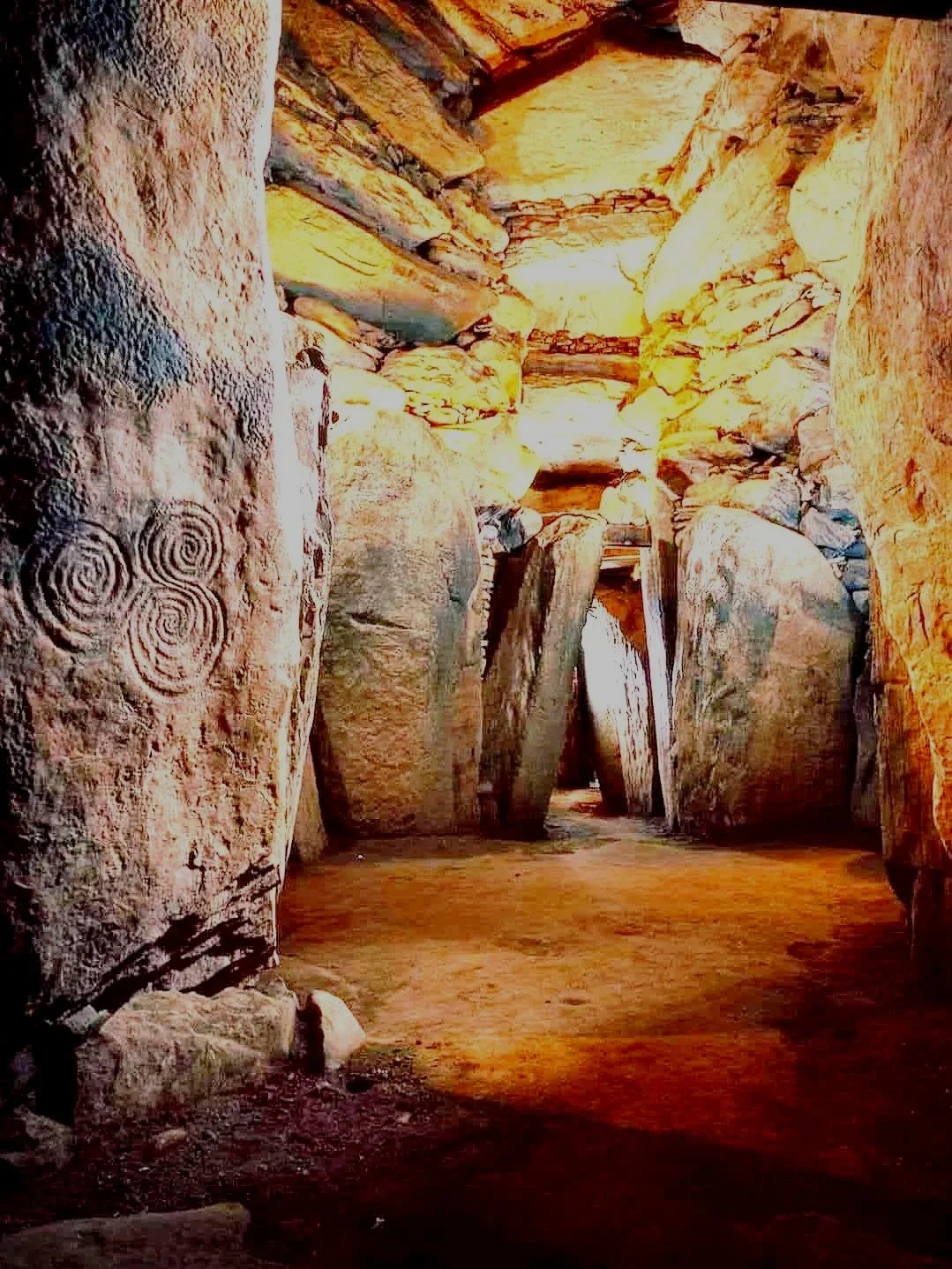
“The space felt neither wholly of this world nor entirely beyond it. The stone basin glowed as if filled with quiet fire, and the walls held them and the ethereal light.”
Fionnán knew. To be of the land is to be the land. To breathe the air, is to absorb the interwoven sacred intelligence that permeates air. We are the stars, he knew. To follow the cycles of the land is to be in right-relation with the land and She speaks to us when we align with her presence. Movement on the land now is at its most still, so we, too, must be still. He understood. To honour that presence, comes through silence.
To be in right-relation with yourself, means to know who, and where, you are. To be in right-relation with the seasons, to know the apex of the year with the fixed stars, and the land, and the spirits of the land. Knowing our deeper self is available most plentifully, now. He saw it now.
Our path is to follow the guidance of the land, of the earth Herself. Always.